

Two Nigerian nationals are dead in incidents now under investigation. Reports of school disruptions, business intimidation, and rising anti-foreigner rhetoric are spreading across parts of South Africa.
Nigeria’s Ministry of Foreign Affairs has sent a formal diplomatic note to Pretoria demanding the protection of its citizens abroad.
South Africa’s xenophobia crisis has entered a dangerous new phase. What is happening, how did it get here, and what does it mean for Nigerians living in the country?
The long history
South Africa’s violence against African migrants is not new. The African Commission on Human and Peoples’ Rights, in a statement issued on 27 April 2026, traced the pattern back to 1998, noting a series of escalating episodes: the killing of three foreign nationals in Johannesburg that year, the August 2000 killings in Cape Town, and the May 2008 nationwide attacks that left more than 60 people dead, 1,700 injured, and 100,000 displaced.
Further waves followed: the 2009 displacement of Zimbabweans in De Doorns, the 2015 nationwide violence that required military intervention, and what the Commission described as ongoing incidents in the 2020s. Nigeria was at the centre of many of these episodes. In 2019, the deaths of Nigerians during a fresh outbreak triggered a diplomatic crisis severe enough for then-President Muhammadu Buhari to order the evacuation of Nigerian nationals from South Africa.
What is Operation Dudula?
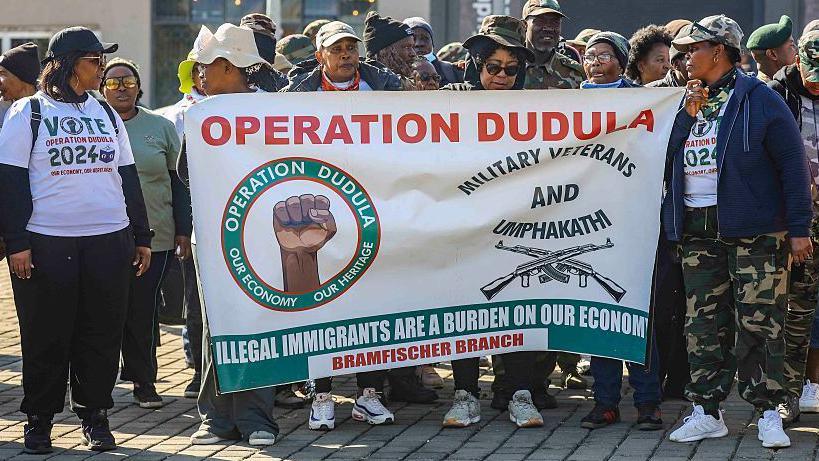
Human Rights Watch, reporting in 2023, traced the origins of Operation Dudula to 2021, when South African youth activists in Soweto formed the group to address crime and drug use in Gauteng. Its name, from the isiZulu word meaning “push out,” signals its primary agenda: the removal of foreign nationals from South Africa.
The group has since expanded across the country. Human Rights Watch documented its activities as including mass deportation campaigns, blockades of clinics and hospitals serving foreign nationals, raids on foreign-owned businesses, and the forced closure of shops. The group contested South Africa’s 2024 general elections as a political party.
In November 2025, the Gauteng Division of the High Court in Johannesburg ruled on a constitutional challenge brought against Operation Dudula, affirming, according to a statement by Media Monitoring Africa, that all persons in South Africa, regardless of nationality, are entitled to dignity, equality, and protection under the Constitution. The ruling addressed vigilantism, xenophobia, and the limits of public authority in enforcing immigration law. Operation Dudula continued to operate regardless.
In 2025, Operation Dudula members systematically blocked entrances to public health facilities in Gauteng and KwaZulu-Natal, demanding individuals show proof of citizenship before receiving care, according to the African Commission on Human and Peoples’ Rights.
The Economic backdrop
The Africa Report, in an analysis published on 24 April 2026, noted that South Africa’s official unemployment rate stood at 31.4 per cent in the fourth quarter of 2025, with youth unemployment at 43.8 per cent, among the highest in the world.
Analysts and rights groups have consistently challenged the claim that migrants drive this unemployment. The Human Rights and Legal Research Centre, in a report published on 27 April 2026, argued that South Africa’s labour crisis is as a result of weak economic growth, a failing education-to-work pipeline, power and logistics failures, and the long-term effects of apartheid spatial exclusion. Foreign nationals, the report stated, have become a visible target for frustrations that the state has failed to address.
19 April 2026: Two Nigerians killed
The Nigerian Consulate General in Johannesburg confirmed the deaths of two Nigerians in separate incidents on 19 and 20 April 2026.
Consul-General Ninikanwa Okey-Uche said in a statement on 28 April that Ekpenyong Andrew was arrested on 19 April in the Booysens area of Pretoria following an alleged altercation with members of the Tshwane Metro Police. His body was later discovered at the Pretoria Central Mortuary.
Okey-Uche said Amaramiro Emmanuel died on 20 April from injuries allegedly sustained after being beaten by personnel of the South African National Defence Force.
The consul-general described the incidents as deeply troubling, adding that the involvement of security personnel had left the Nigerian community and diplomatic missions in shock. The consulate opened formal cases with the South African Police Service and urged the Independent Police Investigative Directorate to conduct a thorough and impartial investigation.
24 April 2026: South Africa’s police ministry condemns attacks
South Africa’s Ministry of Police issued a statement on 24 April condemning recent acts of violence and intimidation against foreign nationals as unlawful and in direct opposition to the country’s constitutional values of dignity, equality, and human rights, according to reporting by Briefly News. No arrests were announced in connection with the killings of the two Nigerians.
25 April 2026: Freedom Day and Ramaphosa’s address
South African President Cyril Ramaphosa used the country’s Freedom Day address, marking 32 years of democratic governance, to speak to the tensions. He urged foreign nationals to respect the laws, conventions, and traditions of South Africa, while reaffirming the country’s commitment to international law and human rights, according to reporting by Punch.
Critics, including rights groups, argued the address placed the burden of responsibility on migrants, rather than focusing solely on perpetrators of violence.
28 April 2026: Schools stormed, Ethiopian national shot dead
Footage circulating on 28 April show members of Operation Dudula storming schools and forcibly removing and blocking children of foreign nationals from attending classes. In one clip, a child cried as a woman believed to be his mother attempted to calm him. Gunshots rang out moments later, sending pupils and bystanders running in different directions.
Separately, an Ethiopian national was shot dead at the intersection of Jeppe and Von Wielligh Streets in central Johannesburg. A widely circulated CCTV footage showed the assailant approach the victim and shoot him at close range without warning, then walk away calmly. No robbery occurred. The South African Police Service confirmed the incident and said no arrests had been made.
In a separate incident also circulated widely on social media, a Nigerian trader was confronted by a group during an anti-immigrant demonstration and ordered to leave the country. “I have been here for a long time, the only thing is what I am doing to feed my children,” the man said. The group dismissed his plea. “From now on, we do not want foreigners in this town. We are fixing our South Africa now,” one protester declared.
Although, these incidents have not been independently verified by major international media, and authorities have not issued formal statements confirming the events, they reflect growing tensions reported in affected communities.
28 to 29 April 2026: Diplomatic fallout
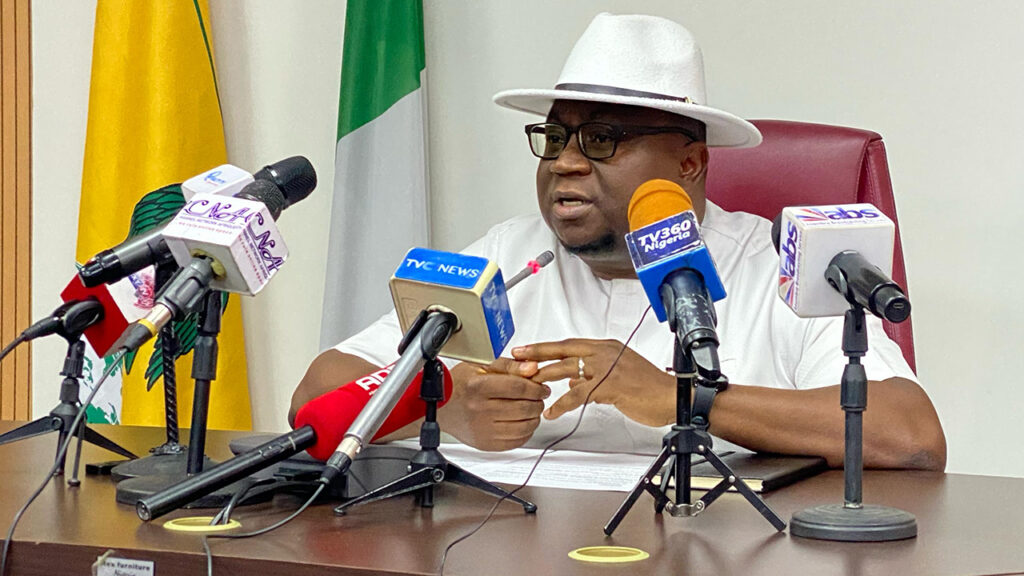
Nigeria’s Ministry of Foreign Affairs issued a formal statement through its spokesperson Kimiebi Ebienfa on 28 April, calling on South Africa to protect the lives and property of Nigerians and other foreign nationals in the country.
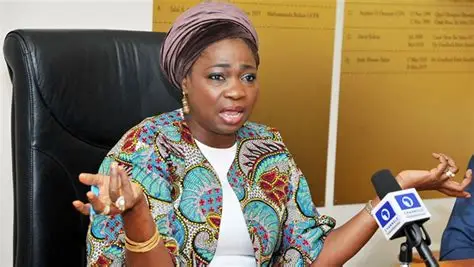
The Nigerians in Diaspora Commission followed on 29 April with a statement from its Chairman, Abike Dabiri-Erewa, saying the situation on the ground was deteriorating despite earlier diplomatic engagements. The commission said reports reaching it indicated that pupils of Nigerian descent had become afraid to attend school, and that business owners were scared to open their shops for fear of targeted attacks and looting. It said community leaders had documented new incidents of violence and intimidation within the preceding 72 hours.
NIDCOM outlined four demands directed at South African authorities: immediate reinforcement of security in affected areas, swift prosecution of perpetrators, the establishment of a joint Nigeria-South Africa safety forum involving law enforcement and community representatives, and a public statement by South African authorities condemning xenophobia and discouraging the stereotyping of Nigerians.
The Nigerian Citizens Association in South Africa, led by its president Frank Onyekwelu, also warned of increasing harassment and called for stronger diplomatic intervention. Onyekwelu described the current climate as one of escalating hostility and urged President Bola Tinubu, the Minister of Foreign Affairs, and the National Assembly to act swiftly.
Nigeria’s Acting Ambassador to South Africa, Temitope Ajayi, said the situation remained under control and was not a coordinated siege against Nigerians. He described the incidents as isolated tension and said both governments were working to ensure the safety of citizens, according to Punch.
Ghana also entered the dispute. The Africa Report noted that Ghana summoned South Africa’s acting high commissioner over incidents targeting Ghanaian nationals, framing the summons not only as a consular matter but as a challenge to the African solidarity Ghana extended during South Africa’s anti-apartheid struggle. The Ghana High Commission advised Ghanaian shop owners to close their businesses during planned anti-immigrant demonstrations.
27 April 2026: African Commission calls for action
The African Commission on Human and Peoples’ Rights issued a statement on 27 April condemning the latest xenophobic incidents as part of a longstanding pattern of violence. It called on South Africa to conduct prompt and impartial investigations, ensure accountability, dismantle vigilante groups engaging in unlawful enforcement, and enhance protection measures for migrants and non-nationals in the country.
What this means
South Africa’s xenophobia problem is structural, not incidental. The same country that needed the world’s solidarity to dismantle apartheid is now permitting the systematic harassment and killing of African migrants within its borders, with limited accountability and a political climate that has allowed anti-immigrant groups to move from the streets into schools, clinics, and mainstream discourse.
For Nigeria, the deaths of Ekpenyong Andrew and Amaramiro Emmanuel represent a qualitative shift. The alleged involvement of South African security personnel, the National Defence Force and the Tshwane Metro Police, means this can no longer be treated solely as a mob violence problem. It is a question of state conduct, and it demands a more formal and structured response than diplomatic notes and safety advisories.
The Nigerians in Diaspora Commission’s warning that the situation is deteriorating, coming days after both governments described earlier engagements as progress, suggests that diplomatic channels alone are not producing results. What happens next will depend on whether Pretoria moves from condemnation to prosecution, and whether Abuja is prepared to apply meaningful pressure if it does not.