

Nigeria spends an estimated $6 billion every year on imported clothing, according to the Federal Government, highlighting the scale of the country’s dependence on foreign garments despite its large domestic market and textile history.
Minister of Industry, Trade and Investment, Dr. Olajumoke Oduwole, said the local textile and garment sector has continued to struggle with heavy importation, weak infrastructure and trade abuses that have slowed domestic production.
She said, “The Nigerian garment industry has long faced challenges. Between 2010 and 2025, it struggled with high-volume low-cost imports competing against a high-potential but underdeveloped local sector.”
Oduwole added that imported fabrics dominate the market, noting that “Nigeria spends approximately $6 billion annually on imported clothing, with over 90% of popular fabrics like Ankara imported. Smuggling, porous borders, and limited infrastructure have further hampered domestic production.”
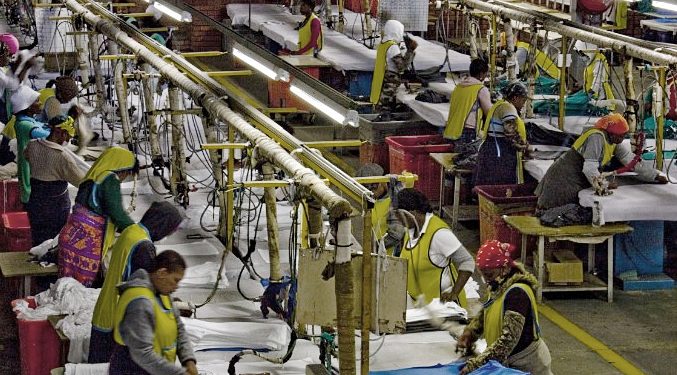
Nigeria was once home to a vibrant textile industry that employed thousands across cities such as Kaduna, Kano and Lagos. However, years of declining factory output, high production costs, inconsistent power supply and influx of cheaper imports weakened many local manufacturers.
The minister spoke in Abuja during the commissioning of a garment factory and the unveiling of Mo’Afrique’s new brand, Modish. She urged local businesses to target exports through the African Continental Free Trade Area (AfCFTA).
She said, “We expect you to have your garments all across Africa and the rest of the world using the African Continental Free Trade Area. This is what generates jobs, employment, and the GDP.”
Founder of Mo’Afrique, Omobolanle Olawale, described the occasion as a milestone for the industry, saying it represented more than a business expansion.
According to her, the launch was “not just about unveiling a brand or opening a facility; it is about vision, resilience, and the promise of a brighter future for Nigerian garment and clothing industry.”
The figures underline both a challenge and an opportunity: while billions leave Nigeria yearly through clothing imports, policymakers say stronger local production could create jobs, boost exports and revive one of the country’s oldest manufacturing sectors.