


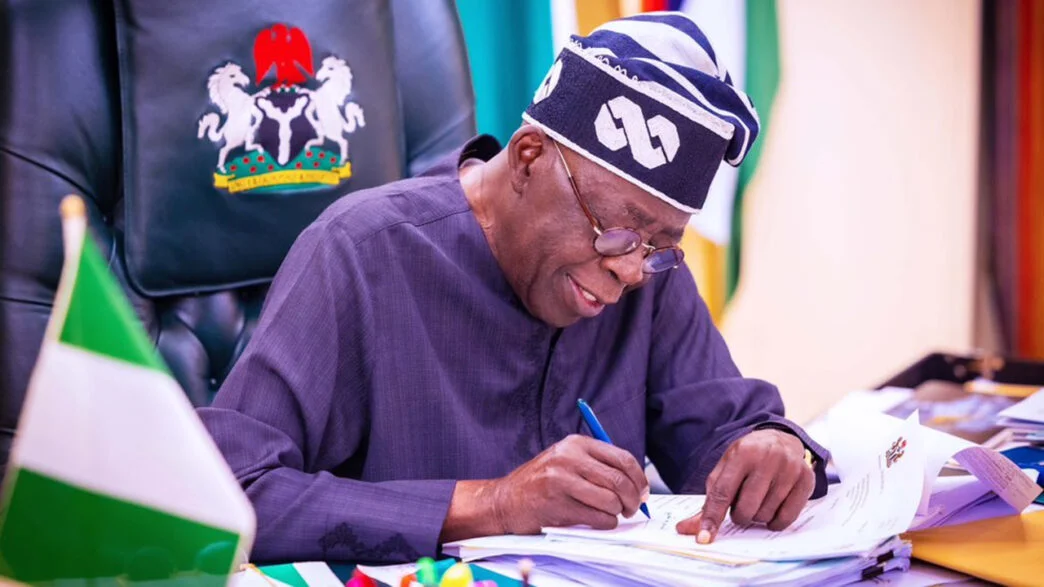
President Bola Ahmed Tinubu has signed into law the 2026 Appropriation Bill valued at ₦68.32 trillion, while also approving an extension of the 2025 budget’s capital implementation period to June 30, 2026.
The newly enacted budget provides ₦4.799 trillion for statutory transfers and ₦15.8 trillion for debt servicing, highlighting the continued weight of fixed obligations on government finances. Recurrent expenditure is set at ₦15.4 trillion, while ₦32.2 trillion has been allocated to capital projects through the Development Fund.
With capital expenditure accounting for about half of the total budget, the administration said the framework is aimed at supporting infrastructure development and economic activity.
In a statement issued by presidential spokesman Bayo Onanuga, the government said,
“With capital expenditure accounting for about 50 percent, the 2026 budget underscores the administration’s continued commitment to economic stability, national security, infrastructure development, and inclusive growth.”
The president also signed the Appropriation (Repeal and Enactment) (Amendment) Bill, 2026, extending the capital component of the 2025 budget from its initial deadline of March 31 to June 30, 2026. The move is expected to allow Ministries, Departments and Agencies (MDAs) to complete ongoing projects.
According to the statement, “The extension will ensure the full and effective utilisation of appropriated funds, particularly for critical infrastructure and development projects that are at advanced stages of implementation across the country.”
Nigeria has in recent years faced challenges with delayed budget implementation and low capital expenditure execution, often resulting in project rollovers. Analysts say extensions such as this are typically used to improve completion rates for projects already underway.
The 2026 Appropriation Act takes effect from April 1, with the federal government expected to begin full implementation immediately. The president directed MDAs to adhere to stricter spending discipline.
The statement noted that Tinubu “directed MDAs to ensure disciplined, transparent, and efficient utilisation of allocated resources, with a strong emphasis on value for money and timely project delivery.”
He also acknowledged the role of the National Assembly in passing the budget, stating that he “commended the leadership and members of the National Assembly for their diligence, cooperation, and patriotism in expeditiously considering and passing the budget.”
The administration said it would continue fiscal reforms aimed at improving revenue generation and funding development priorities, amid ongoing concerns over debt servicing and budget sustainability.