

Every society builds a place that isn’t home or work, where people can simply exist alongside one another. The sociologist Ray Oldenburg gave this idea a name in his 1989 book The Great Good Place, describing it as the “third space,” the social ground where hierarchy softens, conversation flows without performance, and belonging isn’t something you earn so much as something you’re allowed to walk into.
His examples were unglamorous by design: the neighbourhood pub, the diner counter, or the barbershop where the owner already knows your order. The magic was the accessibility, and almost anyone could show up, sit down, and become part of something at almost no cost beyond their presence. That affordability was precisely what made third spaces work.
In Nigeria, that idea is under increasing pressure. The country has faced years of currency devaluation, stubborn inflation, and declining purchasing power, leaving many young people with far less disposable income than previous generations. Multiple recent assessments, including the 2025 State of the Nigerian Youth report from Plan International Nigeria and ActionAid, describe youth unemployment and underemployment as defining challenges, with the overwhelming majority of young workers pushed into informal, unstable income. Separate research also places a large share of the population in multidimensional poverty. When transport, food, rent, and data consume a large share of monthly earnings, spending money on community becomes a luxury. As more social spaces become organised around paid experiences, planning, memberships, and digital awareness, rather than casual drop ins, an uncomfortable question emerges: are Nigerians being priced out of third spaces?
Nigeria never needed to import the concept of third spaces to have the practice. Long before anyone here used the phrase “third space,” Nigerians had already built their own architecture of informal belonging. Weddings, naming ceremonies, and owambe functions double as reunions, and neighbourhood spaces like viewing centres, salons, barbershops, bukka joints, and beer parlours have long served as places where strangers become familiar faces. They are democratic by design, and for a small fee, sometimes waived entirely, anyone can walk in. You do not need an invitation, a reservation, or even to know someone already there. You simply show up, and before long you are part of a conversation about football, politics, relationships, or the rising price of food. These are third spaces in the purest Oldenburg sense: accessible, unpretentious, and open to almost everyone.
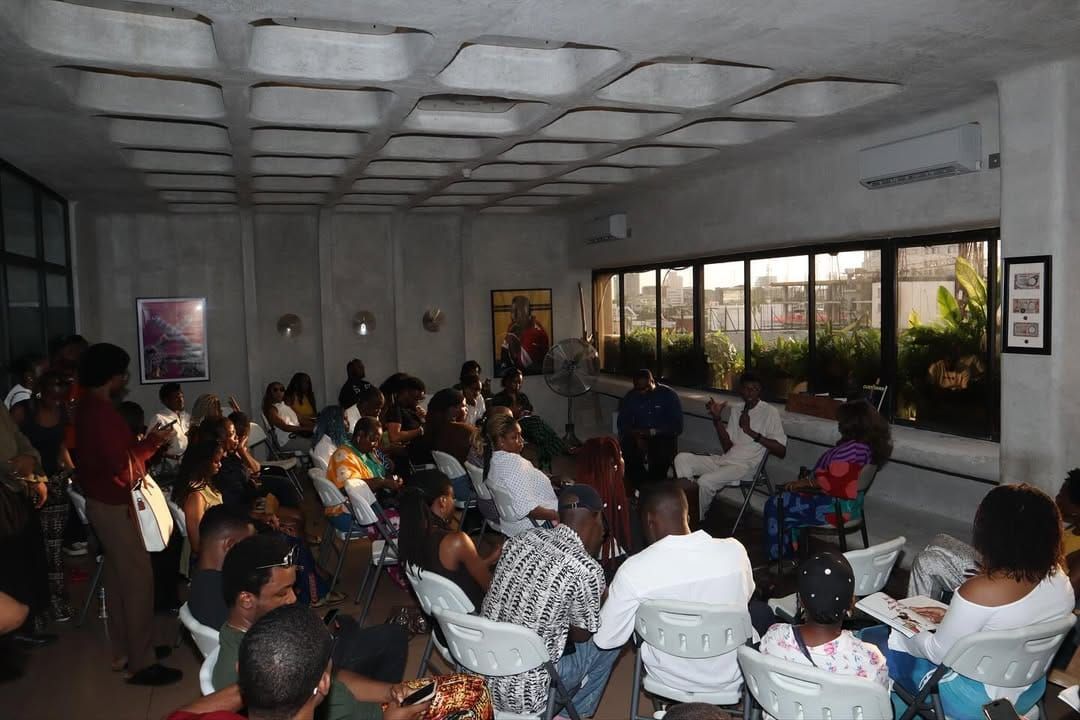
The newer generation of Nigerian third spaces operates differently. Over the last several years, there has been a genuine renaissance of intentional community building through book clubs, film clubs, run clubs, debate societies, art platforms, museums, pottery sessions, and concept cafés. These spaces often bring together people with shared interests, introduce audiences to new ideas, and create opportunities for collaboration. Museums have increasingly become places where young Nigerians gather for exhibitions, talks, and cultural programming. Pottery studios have similarly become popular as creative social experiences where people learn a craft while meeting others.
The difference is not that these newer spaces are less valuable. It is that they are structured differently. Traditional third spaces ask almost nothing of you beyond showing up. Curated third spaces often require planning, registration, digital awareness, and money. Whether it is a museum ticket, a pottery session, a book club membership, or a film screening, participation increasingly depends on disposable income.
This matters enormously because disposable income is precisely the resource many young Nigerians now have the least of. When transport alone eats into a daily budget, paying for a Sunday gathering becomes a genuine trade off against groceries, data, or rent. For many people, the choice is not between attending one event or another. It is whether they can afford to participate at all.
It would be unfair to conclude that organisers of these third spaces are villains of this story. Running any recurring gathering costs real money. Venue rental, generator fuel, refreshments, sound equipment, security, marketing, and countless hours of planning all come at a cost. A monthly art platform or museum programme is not simply putting on an event. It is operating something much closer to a small business, with all the overhead that implies.
These communities cannot open their doors for free. It is one thing to point out, accurately, that ticketed third spaces exclude people who cannot pay. It is another to demand that organisers absorb those costs alone in a country where inflation, rising rents, and currency depreciation have made “free” an increasingly unsustainable model. If a space cannot cover its costs, it closes down, and Nigeria has already seen promising community initiatives disappear for exactly that reason.
The reality, then, is that two things are true. Young Nigerians genuinely have less money to spend on community than they used to, and the people organising many of today’s curated third spaces are not gatekeeping. They are trying to keep fragile, expensive communities alive in an economy that offers very little structural support.
So, are Nigerians being priced out of third spaces? Increasingly, yes, but in a specific sense. Traditional third spaces remain remarkably accessible. It is the newer generation of curated spaces that has become harder for many young Nigerians to enter consistently. The issue is not that organisers are deliberately excluding people. It is that the cost of gathering has risen much faster than the average young person’s income.
What remains hopeful is that Nigerians have always known how to build community. The challenge now is not to abandon curated spaces or expect organisers to bankrupt themselves keeping the doors open, it is to find ways for more of these intentional spaces to become more accessible, so belonging does not depend on how much money you have in your pocket.