

The FBI has asked a US court for permission to explain privately why it is withholding certain investigative records on President Tinubu, citing safety and law enforcement risks.
The Federal Bureau of Investigation (FBI) has asked a US court for permission to submit a sealed, ex parte explanation of why it is withholding certain records related to a decades-old investigation involving President Bola Tinubu.
The agency argued that disclosing its full reasoning in public “would … disclose techniques and procedures for law enforcement investigations and/or could reasonably be expected to en
An ex parte in camera declaration is a written statement submitted to a judge alone, without being shared with the opposing party. In the application, dated August 20 and filed with the US District Court for the District of Columbia, the FBI said it could not publicly explain the full basis for withholding certain material under two Freedom of Information Act (FOIA) exemptions — 7(E), covering law enforcement techniques, and 7(F), covering safety risks and asked to instead lay out its reasoning to the judge alone, under seal. It said it would submit the sealed explanation by August 28 if the court grants permission.
A copy of the application was published on X by Von Batten-Montague-York, a Washington-based lobbying firm recently retained by Atiku Abubakar, the ADC’s 2027 presidential candidate.
The Underlying Case
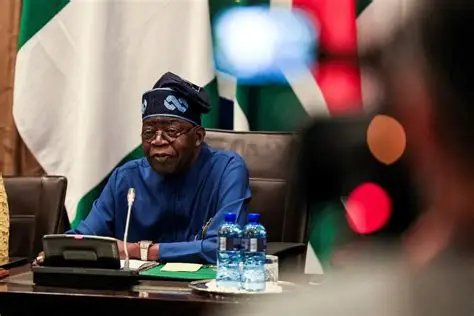
The FBI’s request is the latest development in a FOIA lawsuit filed by Aaron Greenspan, founder of the transparency platform PlainSite, who sought investigative records about four individuals from a Chicago heroin-trafficking case in the early 1990s, Tinubu, Lee Andrew Edwards, Mueez Abegboyega Akande, and Abiodun Agbele. Greenspan filed 12 FOIA requests with six federal agencies in 2022 and 2023; five agencies issued “Glomar” responses, refusing to confirm or deny that any records existed. After the Justice Department’s Office of Information Policy upheld those refusals, Greenspan sued in June 2023.
In April 2025, Judge Beryl Howell ruled that the FBI and DEA’s Glomar responses were “improper and must be lifted,” finding the agencies had not shown that a legally protected privacy interest existed in keeping secret the fact that Tinubu had been the subject of a criminal investigation. Reporting on the case has traced the underlying allegations to a 1993 civil forfeiture in which Tinubu surrendered $460,000 to the US government; he was never criminally charged, and the presidency has consistently denied any wrongdoing.
Delays and a Looming Deadline
The case has since been marked by repeated delays in the agencies’ compliance. The Justice Department recently sought a further 10-day extension to comply with a court order on releasing the records; Judge Howell granted only four additional days, moving the deadline to August 21. Tinubu’s legal team subsequently joined the Justice Department’s extension request, which Howell also declined. Greenspan has separately described the pace of the agencies’ compliance as prolonging the case without producing any pages that reference Tinubu, according to a joint status report he filed.
Tinubu was permitted to formally intervene in the case in 2023 to protect his own privacy interests in the outcome, a request Judge Howell granted at the time. The Nigerian presidency has said it does not expect the eventual release of records to contain any new revelations.
The FBI’s latest filing does not resolve whether the withheld material will ultimately be released; it seeks only the court’s permission to justify the withholding through a sealed process the public and Greenspan’s legal team would not be able to review.