

Nigeria has become the first OPEC member admitted as an associate member of the International Energy Agency while also assuming the presidency of the 2026 Gas Exporting Countries Forum, marking a major milestone in global energy diplomacy.
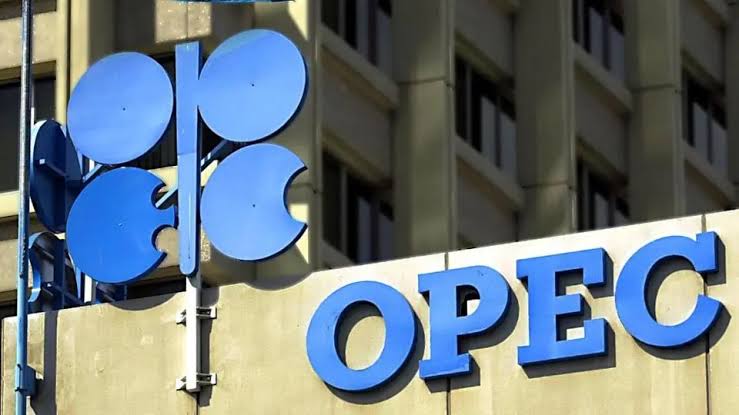
Nigeria has been officially admitted into the International Energy Agency (IEA) as its newest associate member, becoming the first member of the Organisation of Petroleum Exporting Countries (OPEC) to attain the status and the IEA’s sixth African associate member.
The disclosure was made on Tuesday by Ekperipe Ekpo, Minister of State for Petroleum Resources (Gas), during the NOG Energy Week 2026 conference held in Abuja.
Nigeria anchors balanced global energy dialogue as first OPEC-IEA partner
Ekpo confirmed the date of the historic admission and its significance for Nigeria’s global energy positioning.
“On July 2nd, 2026, the International Energy Agency officially admitted Nigeria as its newest association country,” he said.
“As the first OPEC member to partner with the IEA and its sixth African association member, Nigeria is uniquely anchoring a balanced global dialogue, ensuring equitable energy transitions while defending the right of developing nations to responsibly harness their gas assets.”
Nigeria assumes GECF presidency alongside IEA admission
Beyond the IEA membership, Ekpo announced that Nigeria has assumed the presidency of the 2026 Gas Exporting Countries Forum (GECF) ministerial meeting, alongside the election of Nigeria’s Philip Mshelbila as the forum’s secretary-general.
“This dual leadership at the helm of the world’s premier gas alliance reflects international confidence in our technical expertise and policy vision,” he said.
Ekpo used the occasion to outline the ministry’s broader strategic mandate, framing natural gas as the primary engine of Nigeria’s economic growth rather than an export commodity.
“Every initiative undertaken by the Ministry has therefore been guided by one fundamental question: ‘How does this improve the competitiveness and resilience of the Nigerian economy?’ The answer has shaped our priorities,” he said.
The minister said the philosophy underpinning the government’s Decade of Gas initiative is rooted in capturing value at home rather than exporting raw materials.
“Resilient economies are not built by exporting raw materials alone; they are built by capturing and multiplying value at home. This is the core philosophy driving our Decade of Gas initiative. We are aggressively directing natural gas to power our domestic industries, feed our fertiliser and petrochemical plants, revolutionise commercial transportation, and provide clean cooking solutions for millions of Nigerian families,” Ekpo said.
He added that every cubic foot of gas utilised domestically directly creates local jobs, strengthens industrial productivity, reduces dependence on imports and improves the standard of living.
Nigeria’s admission into the IEA marks a significant diplomatic and energy policy milestone. The IEA was founded in 1974 primarily as a body representing oil-consuming nations, making Nigeria’s entry as an OPEC producer, a grouping historically positioned on the supply side of the energy equation, a notable shift in the agency’s composition and reach.
The dual role Nigeria now holds, as both an IEA associate member and GECF president, positions Abuja as a bridge between producer and consumer interests at a time when the global energy transition debate is intensifying. Nigeria’s push to monetise its vast natural gas reserves domestically, rather than simply exporting them, aligns with the IEA’s broader advocacy for cleaner energy sources – a convergence of interests that likely underpinned the admission.