

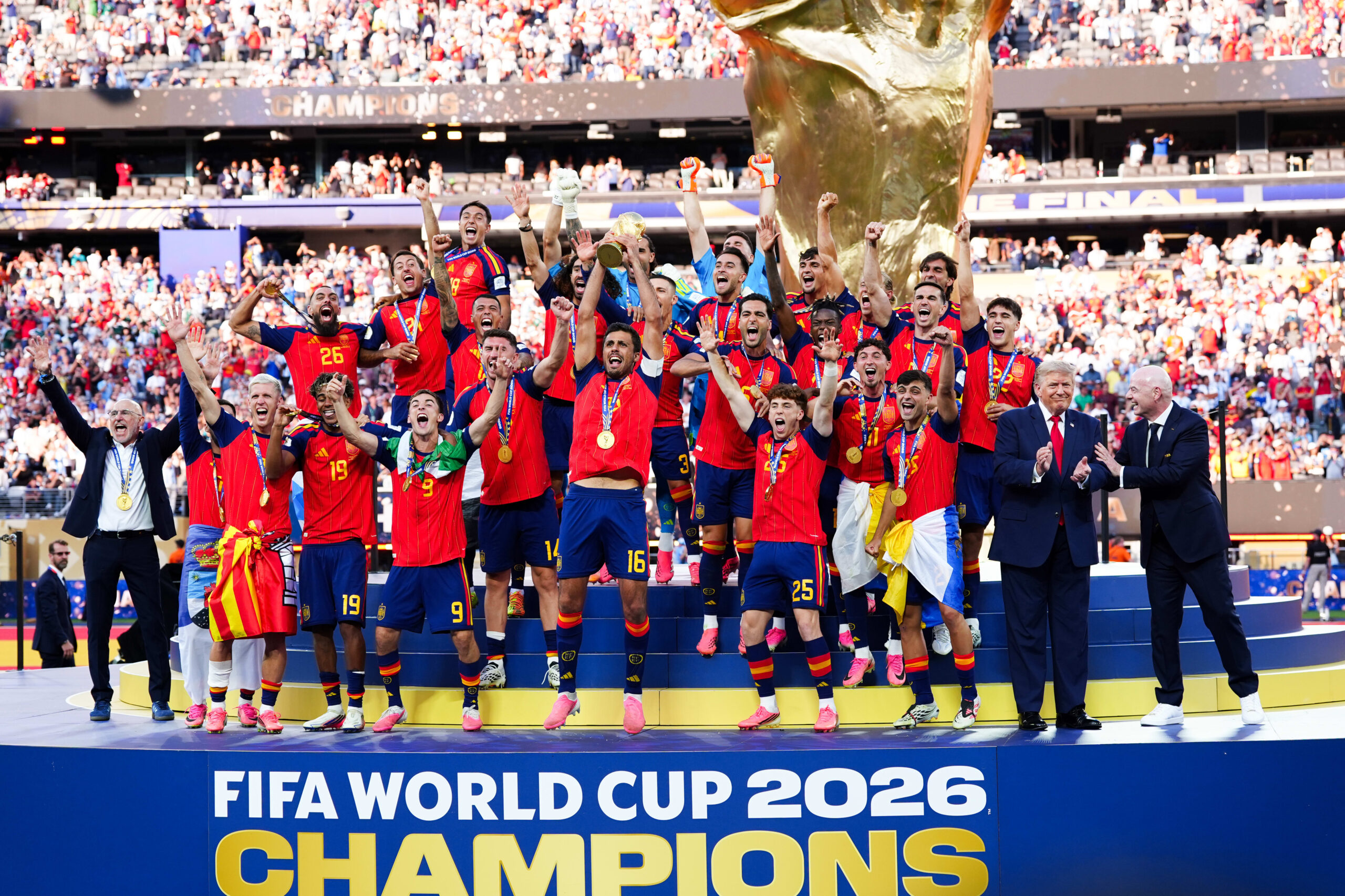
La Roja ended a 16-year wait for football’s biggest prize by defeating defending champions Argentina 1-0 in New York, securing a second FIFA World Cup crown and ending Argentina’s bid for back-to-back titles.
Spain are champions of the world again!
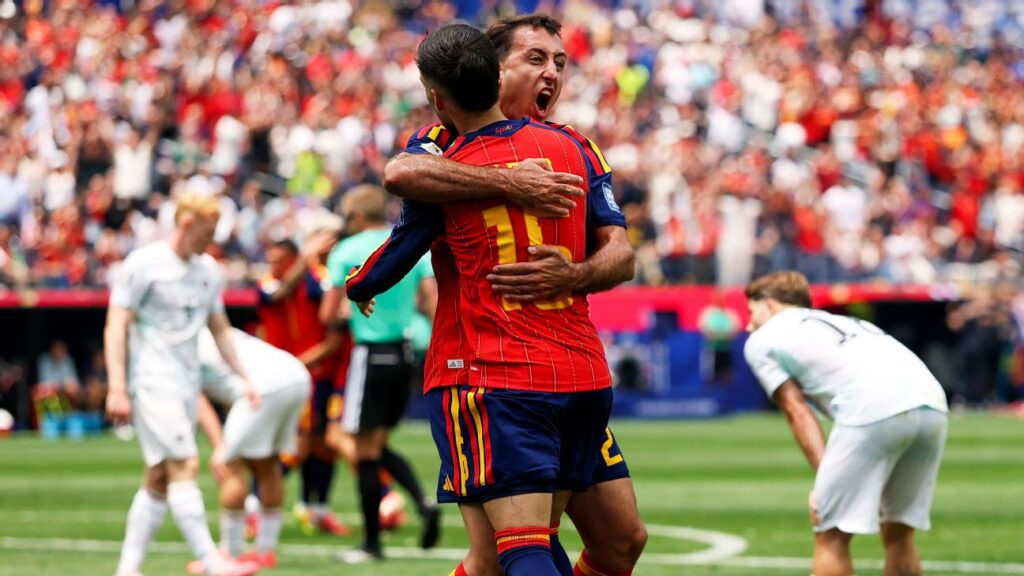
After 105 minutes of deadlock, a single goal separated two of international football’s greatest nations at New York New Jersey Stadium on Sunday as La Roja defeated defending champions Argentina 1-0 to lift the 2026 FIFA World Cup, securing their second world title and ending a 16-year wait since their maiden triumph in South Africa in 2010.
The final was a contest of patience, discipline and resilience, with Spain dominating possession and creating the better chances against an Argentine side determined to defend its crown.
Goalkeeper Emiliano Martínez frustrated Spain for much of the contest with a series of outstanding saves, denying Pau Cubarsí, Pedri, Lamine Yamal and Nico Williams as La Roja piled on the pressure. However, Argentina’s resistance finally broke in extra time when Torres struck what proved to be the winning goal.
Argentina, who had hoped to become the first nation since Brazil in 1962 to successfully defend the FIFA World Cup, struggled to impose themselves offensively. Spain’s disciplined defensive structure restricted Lionel Messi and his teammates, with Argentina failing to register an attempt until extra time. Their task became even more difficult after Enzo Fernández was sent off in stoppage time at the end of normal time.
The defeat brought Argentina’s four-year reign as world champions to an end, leaving them with three World Cup titles, won in 1978, 1986 and 2022, while Spain celebrated their second.
Spain’s road to glory
Spain’s triumph was built on an impressive knockout campaign against some of the tournament’s strongest opponents. They defeated Austria in the Round of 32 before edging past Portugal in the Round of 16.
La Roja then overcame Belgium in the quarter-finals, eliminated France in the semi-finals and defeated Argentina in the final to complete a memorable run to the title.
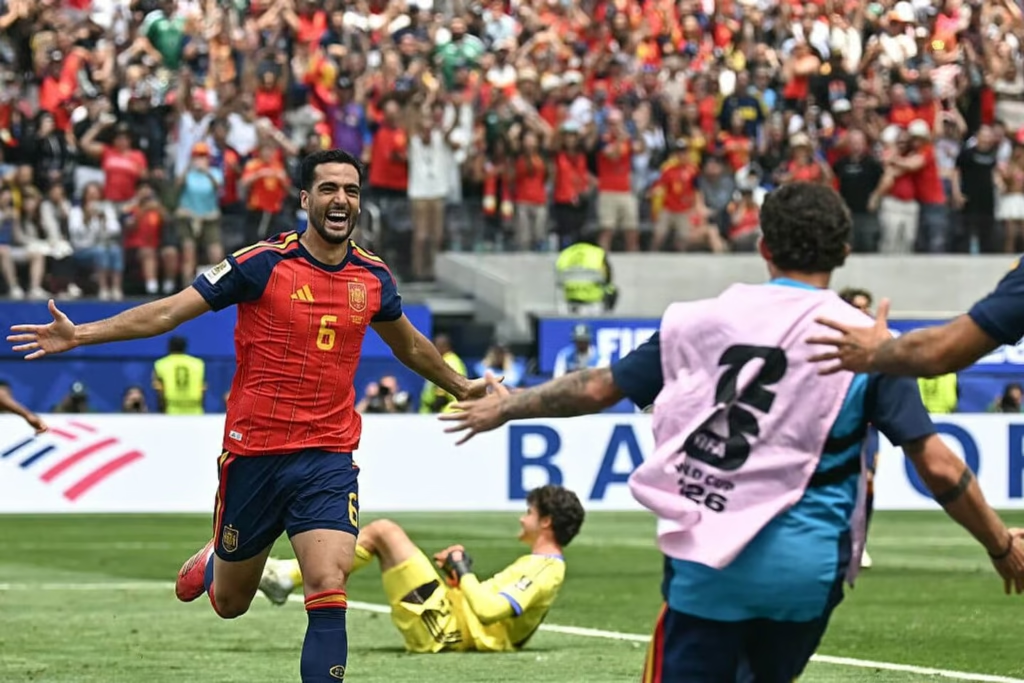
Argentina’s journey was equally impressive. The defending champions defeated Cape Verde, Egypt, Switzerland and England to reach the championship match, only to fall at the final hurdle.
Spain’s victory brought the curtain down on the biggest FIFA World Cup ever staged. The 2026 edition was the first to feature 48 teams and a record 104 matches across 16 host cities in the United States, Canada and Mexico, delivering memorable moments, dramatic upsets and historic milestones throughout the month-long competition.
Individual award winners
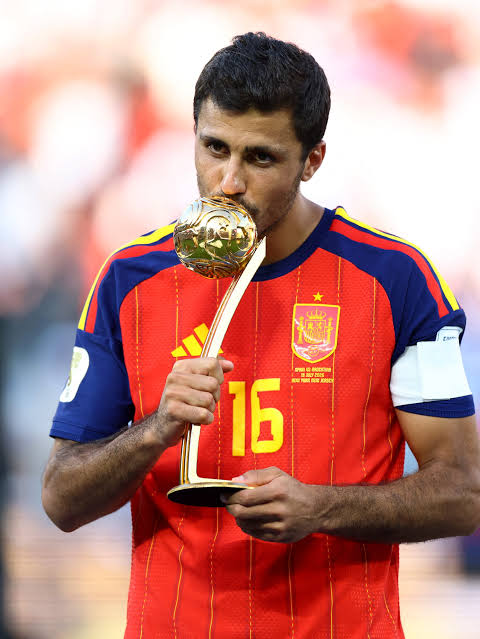
Several players were recognised for their outstanding performances throughout the tournament as FIFA presented its traditional individual awards following the final.
Golden Ball (Best Player): Rodri (Spain)
Silver Ball: Lionel Messi (Argentina)
Bronze Ball: Kylian Mbappé (France)
Golden Boot (Top Scorer): Kylian Mbappé (France) – 10 goals
Silver Boot: Lionel Messi (Argentina)
Bronze Boot: Jude Bellingham (England)
Golden Glove (Best Goalkeeper): Unai Simón (Spain)
FIFA Best Young Player: Pau Cubarsí (Spain)
FIFA Fair Play Award: Netherlands
Spain write a new chapter in world football
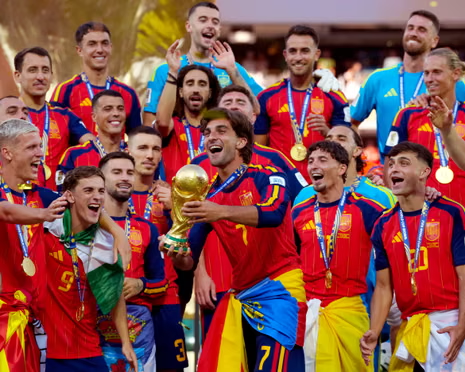
Spain’s triumph adds a second FIFA World Cup title to the one won in 2010, further cementing the nation’s place among football’s elite.
Their first World Cup triumph was defined by the tiki-taka brilliance of Spain’s golden generation. Sunday’s victory, however, showcased a different side of Spanish football, one built on tactical discipline, defensive solidity, squad depth and collective organisation.
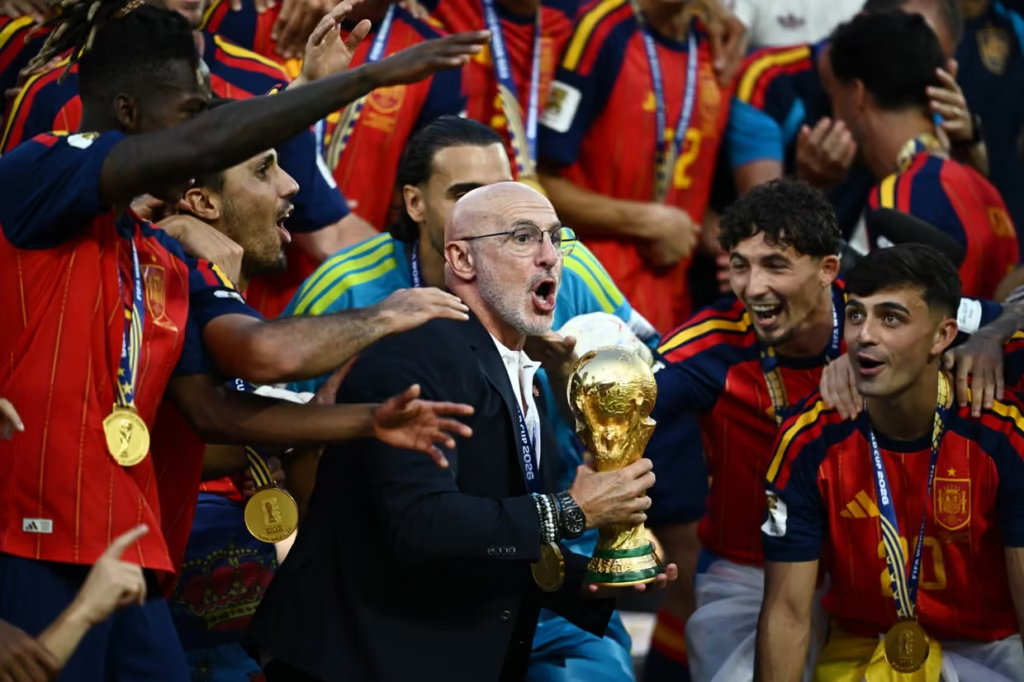
“I think the game should have been decided earlier. Emiliano Martínez’s great saves prevented us from winning sooner, but in a World Cup final you have to know how to suffer,” Spain coach Luis de la Fuente said after the match.
“It was written, and we deserve it,” said a delighted De la Fuente, “This team and this wonderful fanbase deserve everything. We had a date with destiny and we wanted to make it count.
Goalscorer Ferran Torres dedicated the victory to the Spanish people, saying:
“This isn’t just my goal,” he said. “It’s for 47 million people. I want to grab the cup and squeeze it. In the end, when you’ve got Messi on the opposing team, you do get a bit nervous, but we always try to play our own game.”
Argentina manager Lionel Scaloni, who was in charge when they beat France in the 2022 final, broke down in tears in his post-match press conference.
“It hurts my soul. I’m sorry,” he said. “I have to be honest and say that I have to take time and think about the future, because I’m not sure this kind of group can be assembled again.”
Asked whether Messi is planning on retiring soon, he added: “At 39 years old, it’s an incredible thing. He is going to play as long as he wants. He’s the best player to ever set foot on a field. What he did in this World Cup is incredible.”
For Argentina captain Lionel Messi, the defeat ended his bid to become only the second player to captain a nation to two FIFA World Cup titles, having lifted the trophy in Qatar in 2022. The dream of successive World Cup triumphs, last achieved by Brazil in 1962, will have to wait for another generation.