


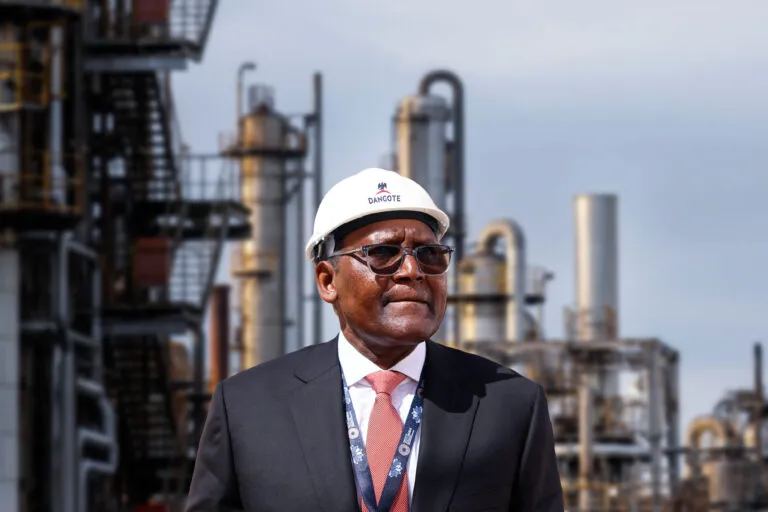
The Federal Government has met with Dangote Refinery, PETROAN and other stakeholders to discuss fair, cost-reflective petrol pricing as falling global crude oil prices fail to reduce pump prices.
The Federal Government on Monday convened key players in Nigeria’s downstream petroleum sector, including officials of Dangote Refinery and petroleum marketers, to discuss fair and cost-reflective pricing of Premium Motor Spirit (PMS), amid concerns that falling global crude oil prices have yet to translate into lower pump prices.
The meeting, held at the headquarters of the Nigerian Midstream and Downstream Petroleum Regulatory Authority (NMDPRA) in Abuja, brought together representatives of Dangote Refinery, the Federal Competition and Consumer Protection Commission (FCCPC), and the Petroleum Products Retail Outlets Owners Association of Nigeria (PETROAN).
Speaking at the meeting, NMDPRA Chief Executive Officer, Rabiu Umar, said the engagement was designed to foster collaboration rather than impose pricing decisions, stressing that regulators and industry players must work together to ensure consumers benefit from improvements in market conditions.
“We want to engage in an open, transparent, and solution-oriented dialogue,” Umar said.
“We want to hear your challenges, discuss market surveillance, look into inventory management, and align on how we can collectively accelerate key mechanisms like the National Strategic Stock (NSS) to protect our national energy security.”
He urged stakeholders to participate constructively in finding “a balanced path forward that keeps your businesses viable while ensuring that the public is fairly protected.”
Government cites gap between crude prices and pump prices
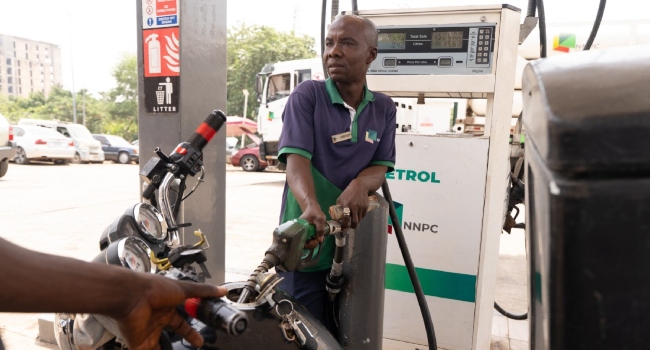
According to Umar, the meeting was convened on the directive of the Minister of State for Petroleum Resources (Oil), Heineken Lokpobiri, as part of efforts to promote “cost-reflective and fair pricing” of petrol across the country.
He noted that the international crude oil market had experienced significant volatility over the past six months due to geopolitical tensions and global conflicts, but prices have recently moderated as those tensions eased.
Despite the decline in global crude prices, Umar said domestic petrol prices have not adjusted accordingly, creating a disconnect that regulators intend to examine with industry stakeholders.
NMDPRA: Deregulation must benefit consumers
“As a responsible Regulatory Authority, it is our duty to step in alongside you, our valued partners, to interrogate the market forces, understand the operational bottlenecks, and directly address this disconnect between falling replacement costs and sustained retail prices,” he said.
The NMDPRA boss also stressed that the Federal Government’s deregulation policy under President Bola Tinubu was designed to encourage competition, efficiency and investment—not to permit market distortions or unfair pricing.
“His Excellency, President Bola Ahmed Tinubu has laid a resilient foundation for a deregulated, competitive, and investment-driven market,” Umar said.
“But let me be clear: deregulation is not a license for market distortion or unfair consumer pricing. It is intended to drive efficiency, maximise value, and protect the public interest.”
He added that profitability for marketers and consumer protection should go hand in hand, calling for a transparent downstream market where reductions in costs are reflected in retail prices within a reasonable timeframe.
“We need to build a transparent ecosystem where the benefits of market improvements are passed down to the Nigerian consumer in a timely and fair manner,” he said.
The meeting comes amid growing public expectations that the recent moderation in international crude oil prices should lead to lower petrol prices, particularly as Nigeria continues to operate a deregulated downstream petroleum market. Industry stakeholders are expected to deliberate on pricing dynamics, market surveillance, inventory management and strategic stock mechanisms aimed at strengthening the country’s energy security while ensuring fair pricing for consumers.