

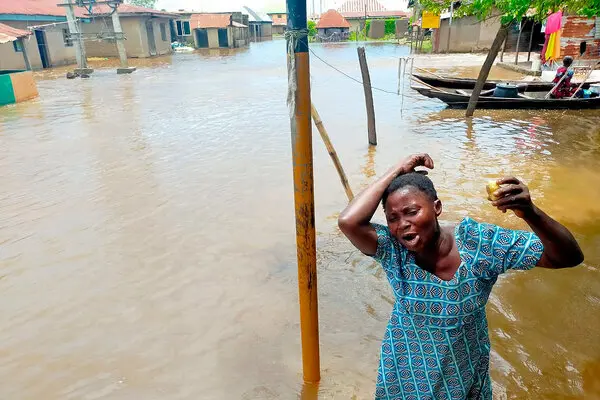
Every year, as the rainy season begins, floods sweep through communities across Nigeria. Homes are submerged, roads become impassable, farmlands are destroyed, and thousands of people are displaced. Flooding has become such a regular occurrence that many Nigerians now expect it as an annual event.
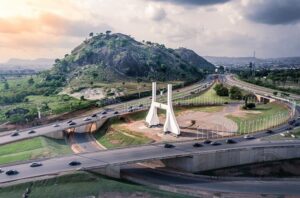
The Federal Government has warned that 33 states and the Federal Capital Territory (FCT) are at risk of flooding this year. The Minister of Water Resources and Sanitation, Joseph Utsev, made the disclosure during the public presentation of the 2026 Annual Flood Outlook (AFO) at the Presidential Banquet Hall in Abuja.
But why does this keep happening?
The answer lies in a combination of natural factors, poor urban planning, environmental degradation, and inadequate infrastructure. While heavy rainfall plays a role, the scale of flooding seen across Nigeria is largely the result of human activities and policy failures.
- Heavy Rainfall and Climate Change
Nigeria’s rainy season typically runs from April to October, with southern states receiving significantly more rainfall than northern regions. During this period, intense storms can dump large amounts of water within a short time.
Climate change has made these weather patterns more unpredictable and severe. Scientists have observed an increase in extreme weather events around the world, including heavier rainfall. When large volumes of rain fall rapidly, rivers overflow and drainage systems become overwhelmed, leading to floods.
The Nigerian Meteorological Agency (NiMet) frequently issues seasonal climate predictions warning states that are at risk of flooding, yet many communities remain vulnerable when the rains arrive.
- Poor Drainage Systems
One of the most visible causes of urban flooding in Nigeria is inadequate drainage infrastructure.
In many cities, drainage channels are either too small, poorly maintained, or completely absent. Even where drainage systems exist, they are often blocked by waste such as plastic bottles, nylon bags, and other refuse.
When rainwater has nowhere to flow, it accumulates on roads and in residential areas. This is why a few hours of rainfall can leave entire neighbourhoods underwater in cities like Lagos, Port Harcourt, Benin City, and Abuja.
Poor maintenance further worsens the problem. Drains that are not regularly cleared become clogged, reducing their ability to carry water away during storms.
- Building on Floodplains
Many Nigerian communities have expanded into areas naturally prone to flooding.
Floodplains are low-lying lands located near rivers and streams. These areas are designed by nature to absorb excess water during periods of heavy rainfall. However, rapid urbanisation has led to houses, markets, and roads being built on these flood-prone lands.
As populations grow and housing demand increases, developers often ignore environmental regulations. The result is that when rivers swell, water flows directly into homes and businesses that should never have been built there in the first place.
This problem is particularly severe in states along major rivers such as the Niger and Benue.
- Overflowing Rivers and Dams
Nigeria’s two largest rivers, the Niger and Benue, contribute significantly to seasonal flooding.
Heavy rainfall within Nigeria and neighbouring countries increases water levels in these rivers. When they overflow their banks, nearby communities are inundated.
Flooding can also be worsened by water releases from dams. The annual release of excess water from dams upstream, including those in neighbouring countries, can increase river levels downstream.
A major example occurred in 2022 when severe flooding affected dozens of states, displacing millions of people and causing extensive damage. Experts linked the disaster to a combination of heavy rainfall and increased water levels in the Niger and Benue river systems.
- Deforestation and Environmental Degradation
Trees and vegetation help absorb rainwater and reduce runoff. When forests are cleared for farming, construction, or firewood, the land loses its natural ability to retain water.
Without vegetation, rainwater flows rapidly across the surface instead of soaking into the ground. This increases the volume of water entering rivers, streams, and drainage systems.
In many parts of Nigeria, deforestation has accelerated over the years, making communities more vulnerable to flooding and soil erosion.
- Rapid Urbanisation
Nigeria’s cities are growing faster than infrastructure can keep up.
As buildings, roads, and concrete surfaces replace natural vegetation, less rainwater can infiltrate the soil. Instead, water runs across hard surfaces and accumulates quickly.
Many urban centres have expanded without proper planning. Roads are constructed without adequate drainage, waterways are encroached upon, and wetlands are reclaimed for development. These practices increase flood risks significantly.
- Weak Enforcement of Environmental Regulations
Nigeria has laws and regulations intended to prevent construction on waterways and flood-prone areas. However, enforcement is often inconsistent.
Illegal structures frequently remain standing despite violating planning regulations. In some cases, drainage channels are deliberately blocked or built over. Political interference, corruption, and weak institutional capacity can make it difficult for authorities to enforce environmental standards effectively.
As a result, flood risks continue to grow year after year.
- Why the Problem Persists
Flooding in Nigeria is no longer simply a natural disaster. It has become a development challenge.
Experts argue that while rainfall cannot be controlled, its impact can be reduced through better urban planning, stronger infrastructure, improved waste management, reforestation efforts, and stricter enforcement of environmental laws.
Many of the factors that cause annual flooding are well known. Government agencies often identify high-risk areas months before the rainy season begins. Yet inadequate preparation, limited funding, and poor implementation mean that the same communities continue to suffer recurring floods.
Until drainage systems are improved, environmental regulations are enforced, and communities stop expanding into flood-prone areas, flooding is likely to remain a yearly reality for millions of Nigerians.