


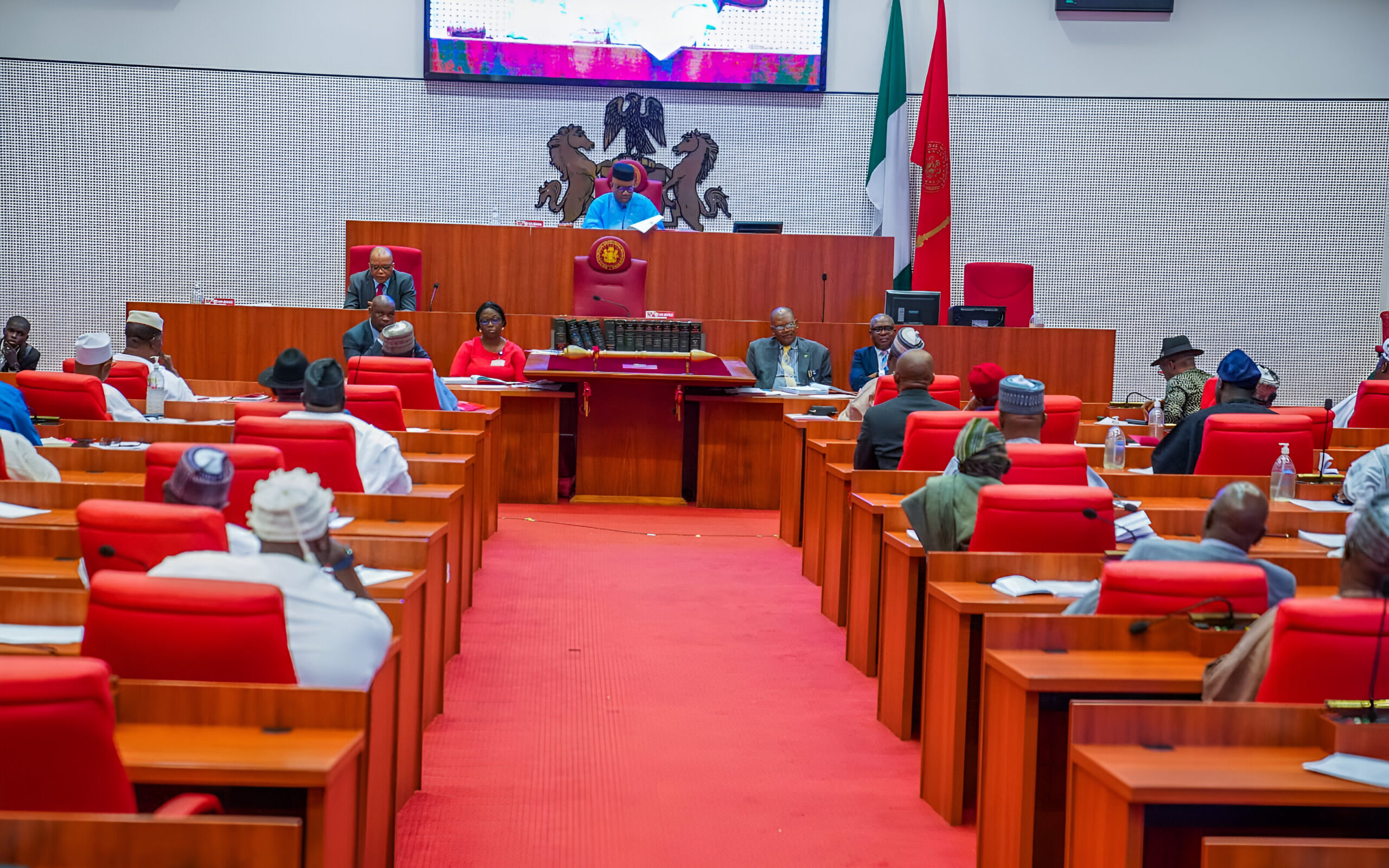
The Senate reviewed a bill on Wednesday that sought to repeal and re-enact the 2024/2025 Appropriations Act, proposing a revised budget of N43.56 trillion.
President Bola Tinubu had earlier sent the Appropriation, Repeal, and Re-enactment Bill 2024 to the national parliament for review earlier in the day.
During the plenary session, the bill passed a second reading.
The proposed expenditure framework allocates N1.74 trillion for statutory transfers.
The bill also allocates N8.27 trillion for debt servicing, with N11.27 trillion set aside for recurring non-debt expenditures.
The expected capital expenditure and development fund contributions total N22.28 trillion.
The Senate has directed Wale Edun, Minister of Finance, Atiku Bagudu, Minister of Budget and National Planning, and Zacch Adedeji, Chairman of the Federal Inland Revenue Service (FIRS), to testify before the Senate Appropriations Committee.
The authorities are expected to share additional information on the proposed spending plan.
Leading the debate, Opeyemi Bamidele, senate leader, said the amendment was “not merely procedural; it is structural and reform-driven.”
Bamidele said the bill seeks “to repeal and re-enact the existing Appropriation framework in order to bring an end to the unhealthy practice of running multiple budget cycles concurrently.”
He said the practice had historically undermined budget clarity, weakened fiscal discipline and blurred accountability across ministries, departments and agencies.
The senate leader said the bill would provide a lawful mechanism to consolidate and appropriate expenditures that are “critical, time-sensitive, and unavoidable.”
He described the proposal as a balance of responsiveness and responsibility.
Bamidele stated that the amendment would ensure that urgent government spending does not undermine legislative oversight or budgetary restraint.
He stated that the law would promote fiscal discipline, accountability, and smart public financial management.
Bamidele further stated that the proposal includes protections ensuring that appropriated monies be distributed and used only for reasons approved by the National Assembly.
He emphasized that virement would only be permitted with prior consent from the national assembly.
“These provisions collectively reaffirm the power of the purse vested in the legislature and ensure that executive flexibility does not translate into fiscal opacity or abuse,” he said.
“They deepen trust in public finance administration and reassure Nigerians that every naira appropriated is traceable, justified, and lawfully spent.”
Following the debate, the senate, presided over by Barau Jibrin, deputy senate president, advanced the bill to second reading.
Jibrin referred the bill to the Senate Committee on Appropriations, which is chaired by Solomon Adeola.
The committee was required to report back to the plenary within two days.