

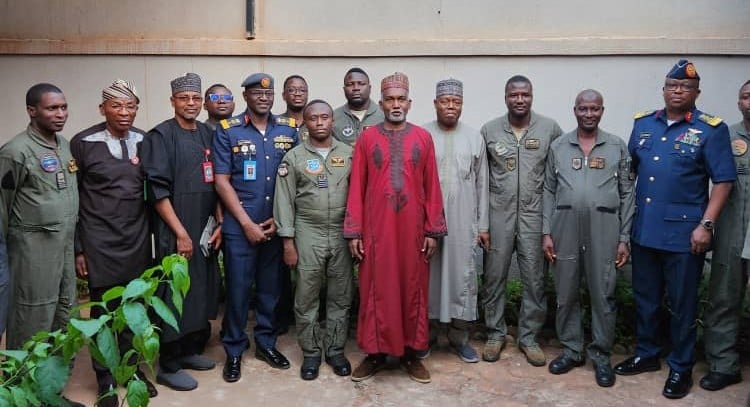
Burkina Faso has released the Nigerian soldiers jailed after their aircraft was forced to land in the Sahel country.
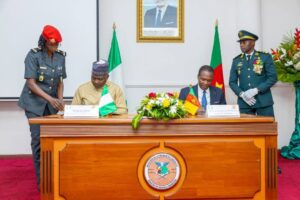
The soldiers were released after President Bola Tinubu sent a delegation led by Yusuf Tuggar, Minister of Foreign Affairs, to meet with Burkina Faso’s junta leader Ibrahim Traoré on Wednesday.
According to Tuggar’s spokeswoman, Alkasim Abdulkadir, both sides reached an amicable agreement over the Nigerian Air Force pilots and crew.
The soldiers were detained for over two weeks after the Confederation of Sahel States (AES) characterized the landing as…
“an unfriendly act carried out in defiance of international law.”
However, the air force stated that the crew discovered a technical issue that required a cautious landing in Bobo-Dioulasso, a city in Burkina Faso with the nearest airstrip.
NAF stated that the landing followed standard safety procedures and international aviation norms.
Last week, there were unsubstantiated claims that Burkinabe officials had released the Nigerian soldiers.
However, Tuggar told TheCable that military soldiers were still in the Sahelian country and that efforts were being made to address the situation as soon as possible.
On Wednesday, Nigerian and Burkinabe authorities met in Ouagadougou to discuss the problem.
According to Abdulkadir, Tuggar delivered Tinubu’s message of solidarity and fraternity to Traoré as both sides discussed ways to boost bilateral relations and regional integration.
According to Abdulkadir, the discussions focused on increasing political, security, and economic cooperation, with a special emphasis on coordinated responses to regional security concerns and collective action within current sub-regional frameworks.
“Both sides agreed to sustain regular consultations and pursue practical measures to deepen bilateral cooperation and regional integration, reflecting a shared resolve to promote peace, unity, and stability in the sub-region,” the minister’s aide said in a statement.
The Nigerian delegation included Mohammed Mohammed, director-general of the National Intelligence Agency (NIA); A. Y. Abdullahi, NAF’s chief of policy and plans; Olawale Awe, permanent representative to the Economic Community of West African States (ECOWAS); and Wahab Akande, chief of protocol at the Ministry of Foreign Affairs.