

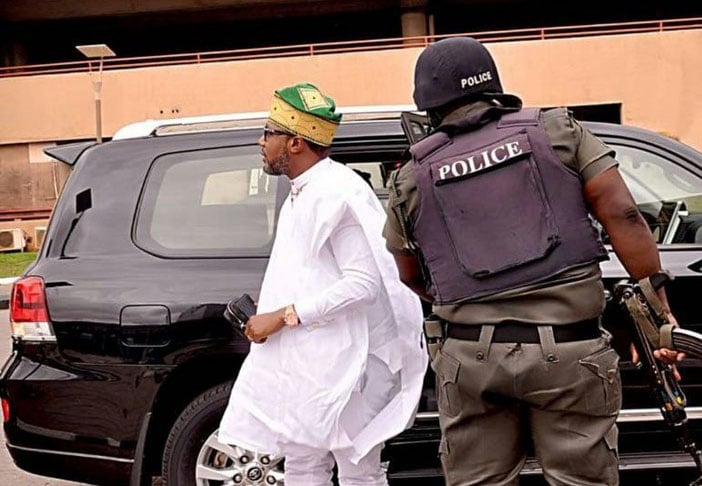
In a familiar script that Nigerians can now recite from memory, the federal government has once again ordered the withdrawal of police officers from protecting Very Important Personalities (VIPs).
This time, the directive comes wrapped in President Bola Tinubu’s newly declared state of emergency on security, a move that suggests Aso Rock has finally noticed what the rest of the country has endured for years: unrestrained kidnappings, expanding banditry, shrinking farmlands, and rural communities abandoned to terror.
The president’s order, on paper, is momentous. But Nigerians have seen this movie before. In fact, the VIP-withdrawal order should qualify for heritage status, given its repeated appearance across administrations. From Tafa Balogun in 2003 to IGP Kayode Egbetokun in 2023 and again in 2025, nearly every police chief has issued the same command. The problem? The directives rarely last longer than the press statements announcing them.
A Reform That Keeps Happening — Without Ever Actually Happening
Nigeria’s policing deficit is well documented. With an estimated 371,000 officers policing roughly 250 million people across 923,000 square kilometres, the country stands at a ratio of 1 officer to 637 citizens — far below the UN’s recommended 1 to 450. But even this inadequate number is misleading. Up to 100,000 officers — according to independent estimates cited by the EU Agency for Asylum — are reportedly attached to VIPs.
In other words, a quarter of Nigeria’s police force is busy opening doors, holding handbags, escorting politicians to private events, and sometimes acting as status symbols for elites who can afford them. Meanwhile, entire communities, especially in the North, go weeks without seeing a single officer. Some villages are over 100 kilometres away from the closest police presence.
Little wonder bandits roam unhindered. In June, 200 people were killed in Yelwata with no meaningful security response. Over 10,000 people have died under the current administration alone, according to Amnesty International. Schools have been shut in at least four northern states. Farming communities in Benue, Plateau, Niger, Zamfara, and Kaduna have collapsed, pushing millions into hunger.
Yet VIPs enjoy security convoys thicker than some local government police formations.
A Long History of Déjà Vu Policing
Nigeria’s leadership has issued versions of this directive repeatedly:
- 2003 — IGP Tafa Balogun
- 2009 — IGP Ogbonnaya Onovo
- 2010 — IGP Hafiz Ringim
- 2012 — IGP Mohammed Abubakar
- 2016 — IGP Solomon Arase
- 2018 — IGP Ibrahim Idris
- 2020 — IGP Mohammed Adamu
- 2015 — President Buhari himself
- 2023 & 2025 — IGP Kayode Egbetokun
Each announcement came with bold assurances, threats of disciplinary action, and talk of “restoring operational effectiveness.” And each effort quietly collapsed once VIPs began making phone calls and the familiar political economy of escort duties reasserted itself.
After all, VIP policing is profitable for officers who receive unofficial allowances, for the elites who enjoy state-funded protection, and for political actors who treat police escorts as extensions of power.
The Current Push: Real Reform or Another Round of National Theatre?
The Inspector-General says 11,566 officers have been withdrawn from VIPs. But when the estimated number attached to elites is around 100,000, the figure raises eyebrows. The government plans to recruit 50,000 additional police personnel and train them over the next nine months, a necessary step, but hardly the magic bullet. Even with new recruits, a centralised policing system of this size cannot effectively secure a country this vast and this unstable.
Which brings us to the long-delayed debate on state police.
For years, the National Assembly has perfected the art of legislative procrastination on this issue. Despite overwhelming support from most governors and security experts, parliament continues to wobble, citing “concerns.” Meanwhile, the same lawmakers move about with convoys of armed escorts the average citizen will never see in a lifetime.
Citizens Paying the Price of Policy Recycling
While political elites negotiate their security comforts, ordinary Nigerians continue to live in fear. Children in IDP camps learn to spell “abduction” before “alphabet.” Farmers abandon their land because their lives are worth more than their harvests. Rural roads have become corridors of uncertainty.
And every few months, a fresh VIP-withdrawal directive emerges followed by the same cycle of weak enforcement, quiet reversal, and expanding insecurity.
A Cautionary Note: Nigeria Cannot Afford Cosmetic Reform—Again
If this latest effort is to mean anything, it must be accompanied by structural reforms. Nigeria requires:
- Multi-layered policing — federal, state, and community.
- Accountable deployment systems — not political allocation of officers.
- Better intelligence use — especially when warnings precede school kidnappings.
- Transparent monitoring of enforcement — so the directive does not quietly die once VIPs complain.
Otherwise, this will become yet another episode in Nigeria’s long-running series, “Reforms We Announced But Never Implemented.”
The president’s emergency declaration signals a political awakening, but implementation is everything. With thousands dead, communities displaced, and schools shut because of fear, Nigeria does not need another performative directive. It needs courage, the political will to break the VIP-policing economy and rebuild a policing system fit for purpose.
The country cannot keep pretending the same old script will magically produce a new ending. Without genuine reform, Nigerians will continue to bury loved ones, abandon homes, and live at the mercy of criminals.
Cosmetic changes will not save the country. Only real policing — for the people, not the powerful — will.