

Every time Nigerians bow their heads in church, they ought to wonder: am I safe enough to pray? That question is no longer rhetorical. Across the country, violence is no longer just an occasional headline, it is the daily soundtrack of too many lives. The latest horror: a congregation in Eruku, Kwara State, witnessing gunmen storm their church mid-service, killing worshippers and abducting others. (Reports say three were killed, many were taken, including the pastor.)
This is not just banditry. It is terror in pews in the place where people come to seek solace and faith. To paint this merely as a security problem is to ignore something far bigger: a national breakdown, a trust deficit, and a danger to the very fabric of Nigeria’s plural identity.
The Security Collapse Is Complete and Smarter Than We Admit
Across Nigeria, from the farmlands to the highways, the sense that nobody is untouchable is growing. Kidnappings, rural attacks, and militia violence have become so frequent that they feel routine. Intelligence seems to be failing at every turn.
In Eruku, the bandits’ boldness was terrifying. Around 6 p.m. during a live-streamed worship service, gunmen forced their way into Christ Apostolic Church (CAC), opened fire, and abducted some worshippers. The local police command later confirmed the “attempted bandit attack” but this was not a simple case of criminal opportunism: it was a deliberate act that struck at a very symbolic target, the house of God.
This is not the first time such communities have cried out for help and gotten silence in return. For weeks, Eruku residents say, they have been begging for protection, yet their pleas have not translated to meaningful action.
Is This Persecution or Just Chaos? The Religion Question Cannot Be Ignored
Many voices now describe these violent attacks as part of a pattern: Christians being specifically targeted. That framing is not unfounded. In war-torn rural areas, especially in Nigeria’s Middle Belt, attacks by herder groups and bandits often intersect with ethno-religious realities. Some analysts warn that the lines between “banditry” and “religious persecution” are becoming dangerously blurred.
Meanwhile, the Yelwata massacre in Benue earlier in 2025, in which countless Christian villagers were reportedly killed, remains a fresh wound. International observers and rights groups have raised serious alarm, though some government officials reject religious martyrdom as the primary narrative.
Yes, Nigeria is deeply complex: ethnicity, land conflict, and religious identity are all tangled together. But when your church can be invaded while you worship, when your pastor is marched into the bush, when your family flees their home because of your faith that is not abstract “insecurity.” That is persecution. Whether it rises to “genocide” is a morally loaded claim, and one must be careful. But it is morally reckless to shrug the issue off.
What Is the Government Doing and Why It’s Not Enough
On paper, Nigeria’s government talks the talk: security strategies, intelligence sharing, renewed commitments to protect all citizens. But on the ground, things look very different. The response to the Eruku attack was delayed, even though video evidence and live-streamed footage made the horror immediately visible to everyone. The local police and vigilantes responded, but how much of that was avoidable if earlier warning signals had been heeded?
And then the communication. Federal authorities often issue statements expressing regret or promising investigations. But for communities under siege, the promises ring hollow. They hear yet another chorus of “we will not relent” while their loved ones remain missing, or worse, lifeless in the bush.
This trust gap is fatal. When people can’t believe in the state’s capacity or will to protect them, they start to feel abandoned. That loss of faith is as dangerous as any gunman lying in wait.
The Human Toll: Not Just Numbers, But Faces and Stories
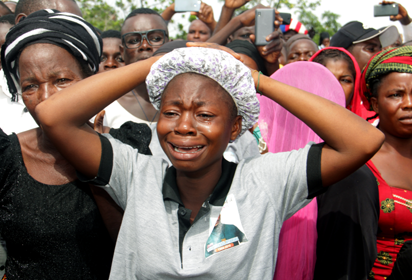
We must say their names. The three (or more) worshippers killed in Eruku. The pastor and other congregants dragged into the forest, their whereabouts unknown. The families left to mourn in silence, afraid to return to their homes or their faith communities.
This violence is uprooting lives. Displaced families, traumatized children, shattered livelihoods, not to mention spiritual trauma. It strips away more than physical safety; it erodes belonging. When believers fear their place of worship is a trap, faith becomes a source of anxiety instead of hope.
These are not faceless statistics. They are mothers, fathers, pastors, teenage worshippers; people who believed in peace and were repaid with violence.
The Political and International Cost
Domestically, this crisis undermines Nigeria’s social contract. The government’s failure to guarantee safety for vulnerable communities shakes the foundation of citizenship. When a community feels that its faith makes it a target, the unity of the nation is under threat.
Internationally, Nigeria is already navigating complicated waters. Accusations of “Christian genocide” have drawn global attention and some diplomatic pressure. Whether through external threats or internal negligence, the question is: can Nigeria be seen as a stable, plural democracy if its churches are battlefields?
If foreign governments decide that Nigeria is no longer safe for one of its faith communities, the geopolitical and financial consequences could be grave. Aid, investment, partnerships depend on perceptions of security. The reputational risk is real.
What Must Be Done: Not Just Prayers, But Action
First, there must be a full, independent investigation into the Eruku attack and similar church assaults. Not a press release. A real investigation with accountability. Whoever planned this, whoever carried it out must face justice.
The government ought to rethink its security architecture. That means not just chasing bandits after they strike but proactively protecting vulnerable communities. Intelligence must be improved. Community policing and collaboration with local leaders (including religious ones) should be expanded not sidelined.
There must also be a transparent national reconciliation, one that acknowledges the role of religion, ethnicity, and poor governance in fueling violence. Nigeria needs a truth-and-protection commission, or some equivalent body, that explicitly recognizes religious targeting, without turning the country into a battlefield of identity politics.
Support for displaced and traumatized victims cannot wait. We need food, shelter, counseling, spiritual care, and legal aid. These are not charity cases, these are citizens whose very humanity is being tested.
Finally, civil society, faith leaders, and political actors must demand more. Churches, mosques, and civil organizations should come together to pressure the government. Religious leaders must speak truth to power, not just to their own congregations. And the international community should help in ways that stabilize, not polarize.
A Test for the Soul of Nigeria
Nigeria stands at a crossroads. The choice is glaring. On one side is denial; claiming that what is happening is just “banditry” or “criminality.” On the other is recognition; admitting that these attacks might be rooted in deeper wounds, and that some of our fellow citizens are being punished for their faith.
If Nigeria continues to fail in protecting its churches and its believers, it risks more than bloodshed. It risks losing its moral compass. It risks telling a generation that their life, their faith, and their community are not worthy of protection.
This cannot be the story of our country. We are more than headlines. We must become more than victims. Our leaders must show not only strength but conscience. And if they will not, we, the people, must.