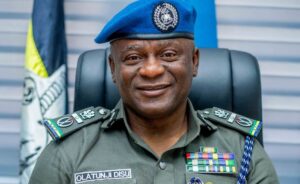



Over the last few days Nigerians have been abuzz. Reports surfaced that middle-rank military officers were plotting to topple President Tinubu. That the national parade for October 1 was cancelled because of a coup-plot. That 16 officers had been arrested. It sounded like an old script and yet, the effect was real. These were not just rumours flying in the wind: they provoked anxiety, they stirred old memories, they triggered a question: What if?
According to the military’s version, the parade was cancelled for mundane operational reasons, and the 16 officers are simply under routine investigation for discipline breaches. And yet, the chatter remains: searches spiked on Google around “first coup in Nigeria” and “military coup in Nigeria” as early as October 1.
So what is really going on? What does this episode say about Nigeria in 2025? And what must we do?
What this reveals about Nigeria today
1. Fragile confidence in the rule of law
When citizens hear about 16 officers under investigation and some stories claim “coup plot”, it doesn’t matter whether the plot is real or not: the fear of it being real speaks volumes. The fact that many believed it enough to search for it suggests that Nigeria’s democratic institutions and the rule of law are not yet wholly trusted.
2. A young population that has never felt a real military takeover—yet knows insecurity
As pointed out in the original piece, Nigeria’s median age is about 18; roughly 63 % of Nigerians are under 25. Many of them have lived their entire lives under civilian government; they have not experienced the direct rule of soldiers in power. (TheCable) But on the other hand, they face persistent insecurity, economic stresses, the sense that “democracy” hasn’t delivered for them. When the mother can’t feed her child, when bandits roam freely, the thought bubbles: would it be different if men in uniform called the shots?
3. Global context, local resonance
It’s no secret that worldwide, coup‐risk is rising. As noted, there are now fewer democracies than autocracies globally. So while Nigeria is not isolated, the possibility of fragility at home still matters. In other words, this rumour is not just “our problem” but a signal that we must pay attention to structural risks.
4. Democracy survives by trust, not mere procedure
Even if this alleged coup plot had no substance, the damage is in the trust deficit: if citizens wonder whether the military could step in, if they search for “first coup in Nigeria”, that speaks to a broader question of faith in the system, in ballots, in selected leaders. The real test is whether Nigerians still believe that the people they vote for and the institutions they support can change their lives. Without that belief, the system becomes brittle.
Implications: Why this matters
- For the military: If officers are restless because of perceived stagnation, unfair promotion systems, or grievances, then these internal issues, though “routine”, become national security risks. The statement from the Defence Headquarters (DHQ) claimed the investigation was disciplinary, not political. Regardless, the optics of “officers arrested” feed a narrative of instability.
- For the government: To be challenged in the whispers by rumours of a coup is to be facing not just a security threat but a legitimacy crisis. If citizens believe change may come by force rather than vote, then you’ve got work to do.
- For the citizenry: The idea that “anything but this government” or “maybe the military would do better” becomes easier when you’re hungry, insecure, or disillusioned. That is dangerous.
- For democracy itself: We can’t pretend that this is just a minor footnote. In every democracy, checks and balances, institutional trust, transparency of process matter. A democracy where people suspect the military is breathing down the neck of civilian rule is a democracy under stress.
What needs to be done
1. Build trust through transparency
The government and security agencies must go beyond denials. If 16 officers are under investigation, publish a summary of the process (while respecting secrecy where needed). Explain the rules for promotions, grievance mechanisms in the military, accountability of senior officers. Let citizens see the system working.
2. Make democracy deliver, visibly
If Nigerians are searching for “military coup in Nigeria”, it’s because the ballot-based government has not visibly improved their lives. Economic hardship, insecurity, joblessness build a hunger for alternatives. President Tinubu’s administration must push visible reforms: security so that parents sleep at night, economy so that food is not a luxury, governance so that citizens feel heard.
3. Strengthen civil-military relations
The military must feel it has a professional path, that frustrations don’t accumulate into mutiny. The civilian government must maintain civilian control, but also ensure the armed forces are respected, resourced, and aligned with democratic norms. Unrest inside barracks cannot remain hidden behind “routine investigation” phrases if we want peace.
4. Youth engagement
63 % of Nigerians are under 25. These are not spectators. They are stakeholders. Engage them. Create platforms for young people to see themselves in governance, to participate, to hold leaders accountable. Let them feel democracy is for them, not just about aged politicians.
5. Communication, not just control
Rumours spread when people feel excluded from the narrative. In a digital age, Google Trends spiked around rumours of a coup. Governments must communicate early, honestly, and involve stakeholders. Silence or denial alone breeds suspicion.
Yes, the coup may not have happened (at least, not as reported). But the whisper itself is a red flag. It tells us that something in Nigeria is fraying. If we ignore it, we risk giving the whisper strength till it becomes a shout.
We must remember that democracy is not simply the absence of tanks on our streets. It’s the presence of hope in our homes, the trust in our institutions, the voice of the young, the accountability of the powerful.
For Nigeria in 2025, the real fight is not only against bandits or economic woes but against the fear that democracy may one day be interrupted. Let’s ensure that fear does not turn into fact.