

The federal government has announced intentions to launch a national campaign to promote domestically produced goods and services as part of the ‘Nigeria First’ program, which aims to revitalise the country’s manufacturing sector.
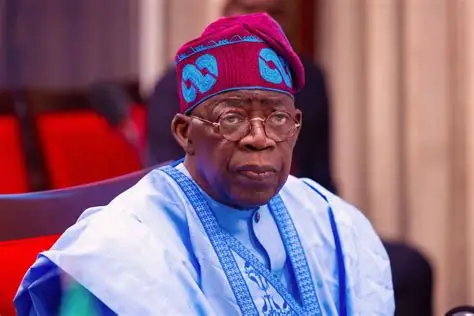
President Bola Tinubu announced the idea during the fifth Adeola Odutola lecture hosted by the Manufacturers Association of Nigeria (MAN).
Tinubu’s representative at the lecture, John Enoh, said the campaign aims to shift national demand towards Nigerian items that match global quality standards while reducing the country’s reliance on imports.
Tinubu stated that the campaign would enhance the manufacturing sector by up to 6% and create more than 500,000 jobs over the next three years.
The president stated that his administration would promote the growth of Nigeria’s manufacturing sector through policies that encourage the production, use, and export of made-in-Nigeria products.
“No country achieves prosperity or dignity without producing what it can and exporting at scale what it does best,” he said.
“Economics of resilience begins in the factory and thrives in the marketplace and we are committed to reducing structural costs and enabling our manufacturers to compete effectively both at home and abroad.”
Tinubu announced six core policy pledges for the ‘Nigeria First’ policy, including federal procurement reforms, quality and standards enforcement, export expansion, access to finance, energy and logistics, and skills development and input security.
He asked MAN members to maintain production quality and openness while working with government authorities to exchange accurate data on capacity and pricing to enable efficient policy planning.
Aliko Dangote, president of the Dangote Group, stated that for the program to be effective, it must be a long-term national industrial development strategy based on worldwide best practices and Nigeria’s industrial reality.
Mansur Ahmed, former president of MAN, who represented Dangote, said that the policy requires design as a durable national strategy to withstand political and market pressures.
“The Nigeria First Policy represents a bold opportunity to industrialise sustainably,” he said
“Its success depends on clear legislation, institutional enforcement, stable policy implementation, and strong alignment across government agencies and industry.
“To transform the economy, the Nigeria First Policy must move beyond declarations into actionable, measurable outcomes that prioritise local value creation and national prosperity.
“Every nation is in a race to improve the living conditions of its citizens and we must realise that we are in this race, and it is a very competitive race.
“The government has done a few things that have given us a fighting chance, the Nigeria First Policy if embraced will place us in a very competitive position.”
Also speaking, Francis Meshioye, president of MAN, praised the ‘Nigeria First’ strategy, stating that good legislation and implementation are critical for developing the manufacturing sector and ensuring national economic survival.