By Opeyemi Oguntoye
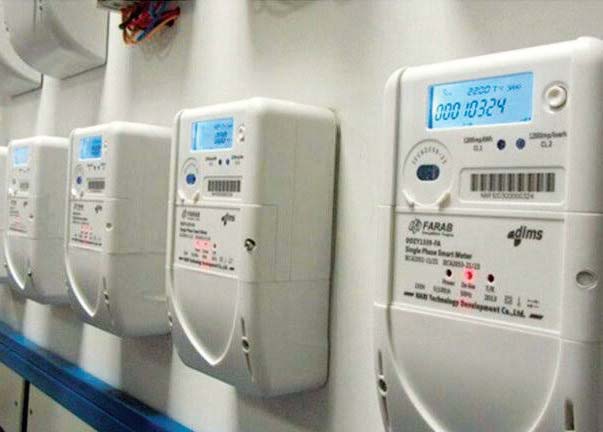
In a bid to fix Nigeria’s electricity system and reduce Aggregate Technical, Commercial, and Collection (ATC&C) losses, many stakeholders, especially within the electricity distribution segment, have over the years attempted several interventions to address these persistent challenges. One of the most significant among these efforts has been the onboarding of millions of electricity consumers onto metering systems.
In 2016, BEDC Electricity Plc (formerly Benin Electricity Distribution Company), one of the electricity distribution company had an opportunity to deploy this approach under the World Bank supported power intervention project in Benin City, which focused on transformer and pole installations. The initiative was conceived by a group of graduate trainees within the company, who proposed strategies adopted in other countries. Their solution was the deployment of a High Voltage Distribution System (HVDS), with electricity meters installed alongside customer connections on the network. The model was technically sound: every household in the community would be metered, while technical and commercial losses would be virtually eliminated.
However, the project collapsed within two months of commencement. This failure remains a critical lesson for government, industry players and policymakers. BEDC engaged a meter installation company based in Lagos, which deployed its staff to Benin for field operations. Unfortunately, many of the meters developed faults, creating major operational challenges. As a field supervisor for the distribution company at the time, I observed that while BEDC demanded strict compliance and quality control, the installers were primarily interested in extracting additional payments from consumers beyond their official salaries. As a result, they concealed faults and refused to report issues to the utility.
Some consumers, as is often the case, colluded with the installers to enjoy free or under-billed electricity. In several instances, meters were deliberately bypassed at the point of installation. This experience demonstrated an uncomfortable truth: if a project is not airtight and continuously monitored at every stage, it will be sabotaged by opportunistic individuals. It is also undeniable that some staff within electricity distribution companies contribute to these failures through negligence or complicity.
More recently, Ikeja Electricity Distribution Company (IKEDC) has deployed a metering and network upgrade system in selected areas of Lagos State. The strength of their approach lies in the integration of technical, commercial, and feasibility assessments. This is why the project has largely succeeded. In Shomolu, Lagos, for example, IKEDC retained the same transformer system but completely rehabilitated the distribution network. Previously, residents and business owners suffered frequent phase failures, broken conductors, and voltage instability. After the technical upgrade and installation of pole-mounted meters, the area now enjoys stable and uninterrupted power supply, while the Disco benefits from near-zero ATC&C losses.
IKEDC removed old, undersized, and deteriorated 415V cables and replaced them with higher-capacity conductors, installed modern meters, and mounted them on electricity poles. This combination of network rehabilitation and metering delivered both revenue protection and improved service quality. This demonstrates that metering alone is insufficient; the entire system must be secured and technically reinforced to prevent revenue leakage.
Network improvement is therefore just as essential as customer metering in reducing ATC&C losses across the distribution segment. Discos must bring strong financial capacity to these projects, while the Federal Government continues to introduce supportive initiatives to ease their funding burden. This approach makes it more realistic to achieve minimal ATC&C losses across the sector, even in historically challenged franchises such as Jos Electricity Distribution Company (JED), Kaduna Electric (KAEDCO), and Yola Electricity Distribution Company (YEDC), whose ATC&C losses remain above 60 percent according to NERC’s 2025 Q2 Report.
Over the past few years, the Presidency has launched multiple metering initiatives, beginning with the National Mass Metering Initiative (NMMI) in October 2020. This programme was designed to end estimated billing, reduce revenue losses, and increase meter penetration by providing free meters to electricity consumers. Initial funding was provided by the Central Bank of Nigeria (CBN), enabling a rapid rollout of one million meters to kick-start the scheme. While this phase made significant progress, it did not fully reach its target before transitioning into the Meter Asset Provider (MAP) scheme. Under MAP, the cost of meters is amortized over time, typically up to ten years, through a Meter Service Charge included in the customer’s electricity bill.
Before these reforms, only about 39.4 percent of Nigerian electricity consumers were metered. By October 2025, this figure had risen to 56 percent, reflecting an increase of approximately 16 percent within five years. At the current pace, it would still take about 13 more years to achieve full national metering, assuming population growth remains constant. Rural metering rates remain especially poor, reflecting weak supervision of Discos and their tendency to prioritize Band A and high-paying customers.
In franchises such as JED, KAEDCO, YEDC, and KEDCO, metering rates are as low as 29 percent, significantly dragging down national performance. For instance, in Q2 2025, Yola Electricity Distribution Company installed only 2,000 meters, while Ibadan Electricity Distribution Company installed over 45,000 during the same period. Meter deployment should never be determined by wealth, geography, or religion, as this undermines the very objective of government interventions. NERC’s metering performance reports clearly explain why gaps and regional disparities persist.
President Bola Ahmed Tinubu, as part of his commitment to protecting ordinary Nigerians from the injustice of estimated billing, launched the Presidential Metering Initiative (PMI). The initiative, comprising two existing programs (the World Bank-supported DISREP, and NERC’s Meter Acquisition Fund) as well as a new, flagship stream (known as PMI-SGDL), aims to deploy over 7 million meters nationwide, eliminate arbitrary billing, restore public trust, and ensure transparent and fair electricity pricing.
For accountability, PMI should operate a dedicated public platform that displays real-time data on meters deployed by state, Disco, installer, and vendor.
A useful precedent exists. When the Nigerian Education Loan Fund (NELFUND) was launched in 2023, some regions accused the government of regional bias. In response, the Managing Director, Mr. Akintunde Sawyerr, published detailed state-by-state and institution-by-institution statistics, backed by official confirmations from universities. Within months, the controversy disappeared. The same transparency model should apply to PMI.
For the Presidential Metering Initiative to truly fulfill the President’s Renewed Hope energy vision, it must be designed to be sabotage-proof. This requires more than simply distributing meters. An independent monitoring team must physically verify each installation, certify workmanship, and seal every meter. NERC’s penalties must be enforced without compromise.
Mass metering must also go hand in hand with mass network modernization. As demonstrated in Shomolu, upgrading cables and transformers alongside meter installation converts billing reform into genuine service improvement, while drastically cutting technical losses. Equally important is radical transparency through a real-time performance dashboard that tracks every Disco and every contractor.
Most importantly, the PMI must deliberately prioritize underperforming regions and Discos where metering rates remain below 30 percent. A national programme must not deepen geographic inequality. Only through this integrated, vigilant, and transparent framework can PMI accelerate progress, protect public investment, and finally liberate the 45 percent of Nigerians still trapped under the tyranny of estimated billing.
Oguntoye Opeyemi (@Equityoyo) is a Nigerian engineer and public affairs commentator known for his insights on politics, governance, and national development. He shares analysis and opinions on current issues in Nigeria, contributing to public discourse both online and through opinion pieces.