



The Federal Airports Authority of Nigeria (FAAN) has introduced an electric shuttle service at the Nnamdi Azikiwe International Airport, Abuja, marking a strategic pilot in clean mobility and digitally driven transport operations within Nigeria’s aviation ecosystem.
Abdullahi Ganduje, FAAN’s Board Chairperson, commissioned the project alongside the authority’s Managing Director and Chief Executive Officer, Olubunmi Kuku, representatives from partner enterprises, airport stakeholders, and other top officials.
Speaking at the unveiling, Mr. Ganduje stated that the initiative highlighted the authority’s commitment to cleaner energy solutions in airport operations. He praised the Federal Government’s and the Ministry of Aviation’s help in moving the plan forward.
Launched in partnership with Possible EVs, the service branded “Air Shuttle NG” deploys 100 percent electric buses to provide scheduled airport-to-city transport, running every 30 minutes between the airport bus terminal and Wuse 2, a key commercial and residential hub in the federal capital.
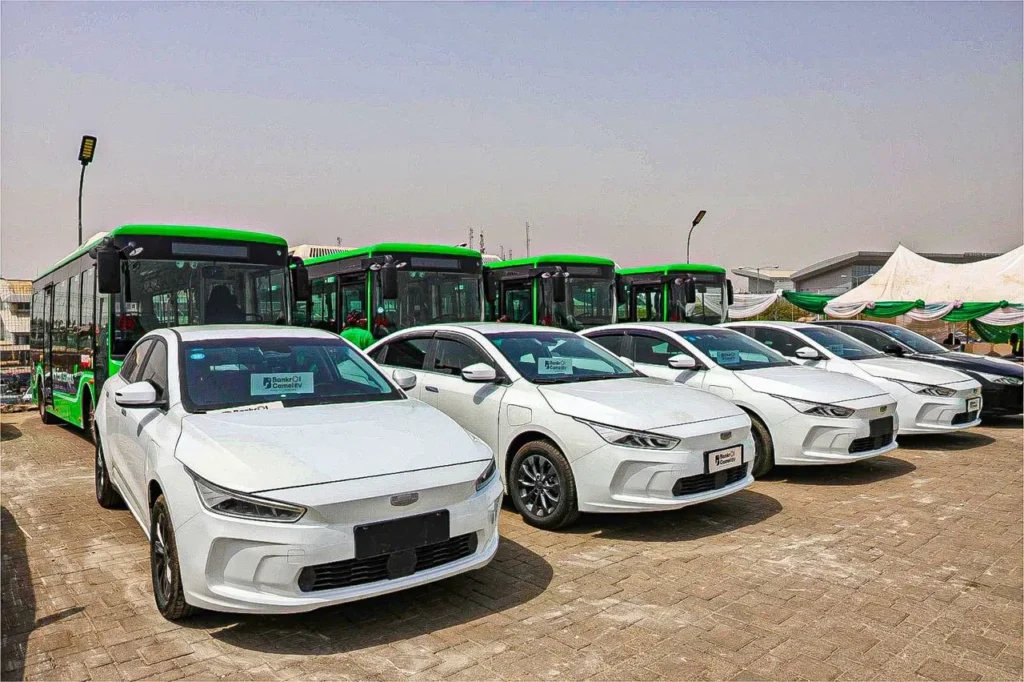
At a flat fare of ₦10,000 per trip, with payments restricted to POS and bank transfers, the shuttle reflects a deliberate move towards structured pricing and cashless operations, long advocated as necessary reforms in Nigeria’s ground transport and aviation-adjacent services.
Beyond passenger convenience, the initiative signals a broader institutional shift. Aviation authorities globally are under increasing pressure to decarbonise ground operations, and FAAN’s adoption of electric buses positions Nigeria’s airport infrastructure within that evolving framework, albeit at a pilot scale.
For Possible EVs, the partnership offers a high-visibility test case for electric vehicle deployment in regulated public infrastructure, a sector where adoption has been slow despite growing policy interest in clean energy and emissions reduction.
The service includes defined luggage limits and fixed departure intervals, addressing persistent concerns around unpredictability, informal pricing and service quality that have characterised airport ground transport in major Nigerian cities.
While limited in scope, industry analysts say the Abuja rollout could inform wider deployment across Nigeria’s international airports if operational efficiency and passenger uptake meet expectations. More broadly, it offers insight into how public institutions may increasingly leverage private-sector innovation to modernise transport systems without large-scale public capital outlay.