


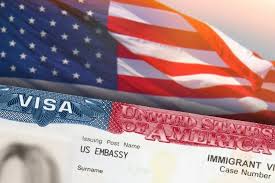
US State Department intends to suspend visa processing for citizens of 75 countries, including Nigeria, who are likely to rely on welfare and public services.
The suspension, which would begin on January 21 and last indefinitely until the department completes a reassessment of immigrant visa processing, would affect applicants from Africa, the Middle East, Asia, Europe and Latin America.
The move also affects Nigeria, Somalia, Egypt, Iran, Iraq, Yemen, Afghanistan, Russia, Brazil, and Thailand, among others.
President Donald Trump published a list of welfare dependant rates among immigrants earlier this year, stating that approximately 33.3% of Nigerian immigrant households received some type of public assistance.
A State Department letter, first obtained by Fox News Digital, ordered US embassies and consular staff to refuse visas under current public charge law while the department reviewed screening and vetting procedures.
The guideline states that older or overweight candidates, as well as those who have previously received government cash assistance or been institutionalized, may be denied.
“The state department will use its long-standing authority to deem ineligible potential immigrants who would become a public charge on the United States and exploit the generosity of the American people.
“Immigration from these 75 countries will be paused while the State Department reassess immigration processing procedures to prevent the entry of foreign nationals who would take welfare and public benefits,’’ State Department spokesperson, Tommy Piggott, said in a statement.
In November 2025, a State Department cable was dispatched to posts around the world, instructing consular agents to execute extensive new screening regulations under immigration law’s “public charge” provision.
The guidance directed consular officers to reject visas to applicants who are likely to rely on public benefits, taking into account a variety of variables such as health, age, English ability, finances, and even the possibility of requiring long-term medical care.
While the public charge provision has been in place for decades, enforcement has varied greatly across administrations, with consular personnel generally granted significant discretion in applying the norm.
The Immigration and Nationality Act has traditionally allowed consular officers to rule applicants inadmissible on public charge grounds, but in 2019, President Donald Trump broadened the language to cover a larger variety of public benefits.