

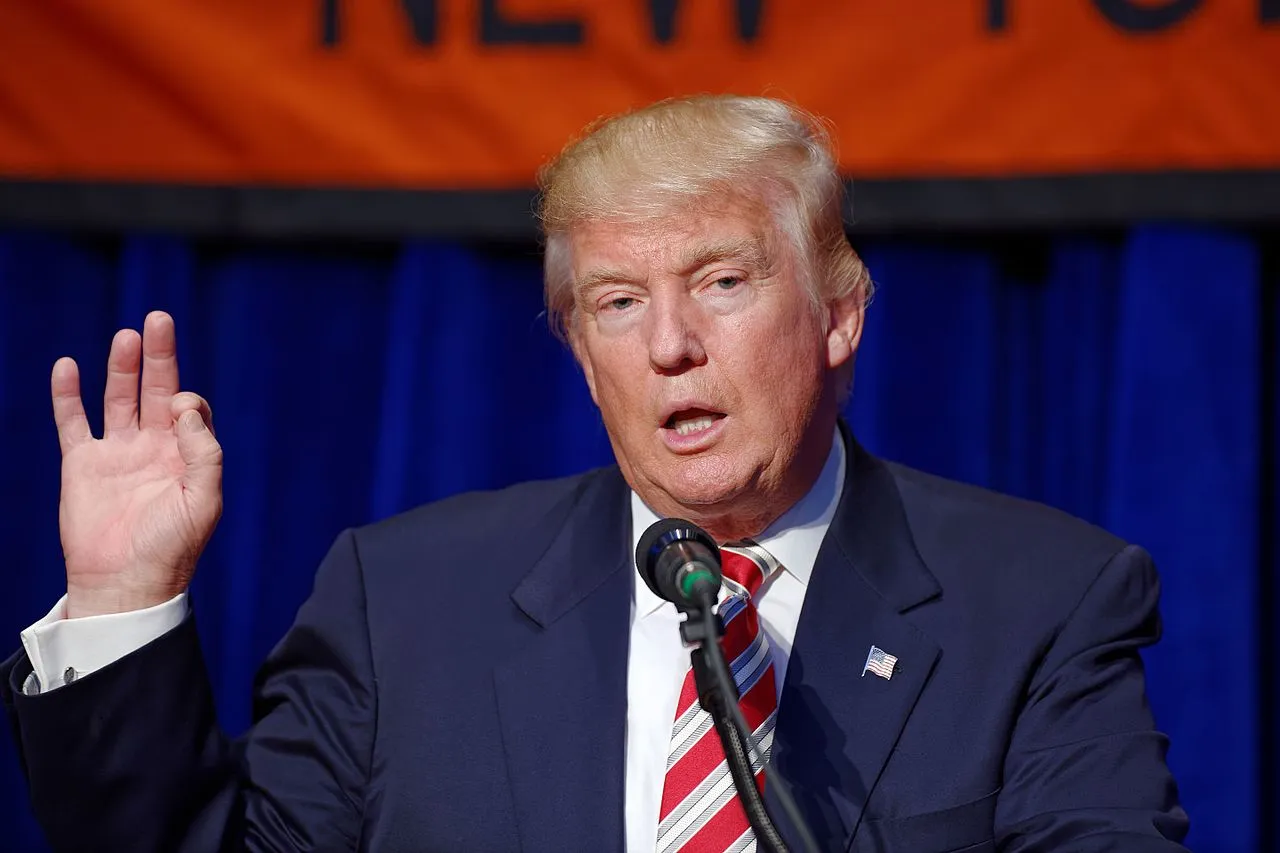
US President Donald Trump posted a list of immigrants’ welfare statistics, saying that approximately 33.3% of Nigerian immigrant households get some type of public assistance in the United States.
On January 4, 2026, the chart was uploaded on Trump’s Truth Social platform, coinciding with ongoing Republican arguments about immigration, welfare dependency, and economic contribution in US politics.
The graphic, titled “Immigrant Welfare Recipient Rates by Country of Origin,” shows the number of families in around 114 countries and territories that receive some type of public assistance, such as food aid, healthcare benefits, and so on.
The top ten countries with the highest reported welfare rates are Bhutan (81.4%), Yemen (75.2%), Somalia (71.9%), the Marshall Islands (71.4%), the Dominican Republic (68.1%), Afghanistan (68.1%), Congo (66.0%), Guinea (65.8%), Samoa (1940-1950) (63.4%), and Cape Verde (63.1%).
The top ten countries with the lowest percentage of immigrant households receiving assistance are Bermuda – 25.5%, Saudi Arabia – 25.7%, Israel/Palestine – 25.9%, Argentina – 26.2%, South America (unspecified) – 26.7%, Korea – 27.2%, Zambia – 28.0%, Portugal – 28.2%, Kenya – 28.5%, and Kuwait – 29.3%.
Along with the welfare figures, the Trump administration increased travel bans and immigration restrictions on who can enter the United States and under what conditions. Initially, a presidential proclamation issued in June 2025 imposed complete and partial travel bans on foreign people from a number of nations identified as security hazards, citing terrorism fears, inadequate identification document systems, and insufficient cooperation with US immigration authorities. Full bans prohibited all visa issuance and entrance for citizens of 12 nations, while partial restrictions limited visa categories such as tourist, student, and exchange visas for seven more.
Late in December 2025, the White House released a new proclamation extending existing regulations through 2026 and expanding the list to 39 nations with full or partial restrictions beginning January 1, 2026. Burkina Faso, Mali, Niger, South Sudan, and Syria were among the new nations added to the comprehensive prohibition list, as were persons traveling with Palestinian Authority travel credentials. Some countries, including Nigeria, Angola, Benin, Côte d’Ivoire, Dominica, Gabon, The Gambia, Malawi, Mauritania, Senegal, Tanzania, Tonga, Zambia, and Zimbabwe, now face partial restrictions on immigrant visas and non-immigrant visa categories like F (student), M (vocational students), and J (exchange).
The Trump administration has enacted a number of immigration policy reforms that reflect a harder stance on both legal and irregular migration, including increased vetting and enforcement efforts on numerous fronts. In July 2025, the United States drastically modified its visa policy for Nigerians. The Department of State now restricts non-immigrant visas to single-entry permits with a three-month validity period. The new system aligns global travel standards with U.S. security regulations, replacing the previous five-year multiple-entry visa system.
These visa enforcement changes are part of a larger crackdown that includes further immigration measures. According to reports, the Trump administration would revoke approximately 85,000 visas in 2025, reflecting stronger review standards and more stringent enforcement objectives for foreign visitors and students.