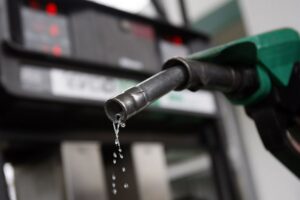



The Nigeria Customs Service and the Nigerian Midstream and Downstream Petroleum Regulatory Authority have increased collaboration to combat the diversion of petroleum products intended for local consumption, as Nigeria steps up efforts to maintain energy security while growing gasoline exports.
The reinvigorated resolve was reiterated during a meeting between Adewale Adeniyi, Comptroller-General of Customs, and Mr. Ogbugo Ukoha, Executive Director of Distribution Systems, Storage, and Retailing Infrastructure at the NMDPRA.
According to a statement issued on Sunday by the Customs Service’s National Public Relations Officer, Abdullahi Maiwada, the engagement aimed to tighten border controls, improve intelligence sharing, and align enforcement actions with impending petroleum sector reforms.
The statement read.
“The Nigeria Customs Service and the Nigerian Midstream and Downstream Petroleum Regulatory Authority are strengthening their collaboration to combat the diversion of petroleum products intended for domestic use and to safeguard Nigeria’s energy security.”
Speaking during the meeting, Adeniyi stated that the Customs Service remains dedicated to robust inter-agency cooperation to guarantee that petroleum products intended for local use are not diverted to neighboring nations.
He stated that collaborative operations with the NMDPRA had already yielded significant results, particularly Operation Whirlwind, which he described as a model for intelligence-driven enforcement, coordinated field operations, and real-time information sharing.
The Customs Commissioner noted that the Service was completely aligned with petroleum regulatory reforms and would continue to provide technical input, operational feedback, and border management skills to support the implementation of new recommendations produced by the NMDPRA.
Adeniyi also praised the Authority for aligning historical systems with the Petroleum Industry Act, stating that clear and efficient export-point procedures were vital as Nigeria transitioned from a net importer to an emerging exporter of refined petroleum products.s.
“We welcome every initiative that strengthens energy security and ensures that the gains made in reducing cross-border diversion are not reversed. Our shared responsibility is to protect national interest, support legitimate trade, and maintain a transparent system that stakeholders can rely on. We will continue to work closely with sister agencies to achieve these outcomes,” he stated.
In his remarks, Ukoha, the Executive Director, stated that the NMDPRA has a historic and beneficial working relationship with the Nigeria Customs Service, with Operation Whirlwind remaining the pinnacle of that collaboration.
He explained that both agencies deployed personnel, shared intelligence, and collaborated to monitor petroleum products in border corridors, resulting in a significant reduction in cross-border diversion.
Ukoha stated that the goal of the visit was to brief the CGC on newly developed criteria for selecting export ports for petroleum products as Nigeria’s refining capacity grows.
He stated that the NMDPRA is working with critical institutions such as Customs, the Central Bank of Nigeria, the Federal Ministry of Industry, Trade and Investment, and the Nigerian Navy to ensure that the rules are operationally relevant before they are implemented.
He reviewed many field operations and strategic interactions with Customs leadership, including the combined launch of Operation Whirlwind in Yola, where both agencies reaffirmed their commitment to reducing diversion and safeguarding the domestic supply chain.
He went on to say that, while enforcement had played an important part in lowering irregular movements of petroleum products, the elimination of gasoline subsidies had greatly diminished the economic motivation for cross-border smuggling.
According to him, the NMDPRA will continue to collaborate with the Customs Service to maintain progress and ensure that petroleum exports are appropriately regulated without jeopardizing the country’s energy security.
Nigeria has recently faced large-scale diversion and smuggling of subsidised petroleum products to neighbouring nations, costing the economy billions of naira every year.
With subsidy removal and increased local refining capacity, largely driven by private refineries, regulators’ attention has shifted to balancing export opportunities with the need to secure domestic supply, a task that both Customs and the NMDPRA say necessitates tighter coordination and clearer rules at Nigerian borders.