

The Federal Government has confirmed that Abuja will host the world’s first UNESCO Category 2 Media and Information Literacy Centre, scheduled to begin operations in February 2026, with preparations now underway.
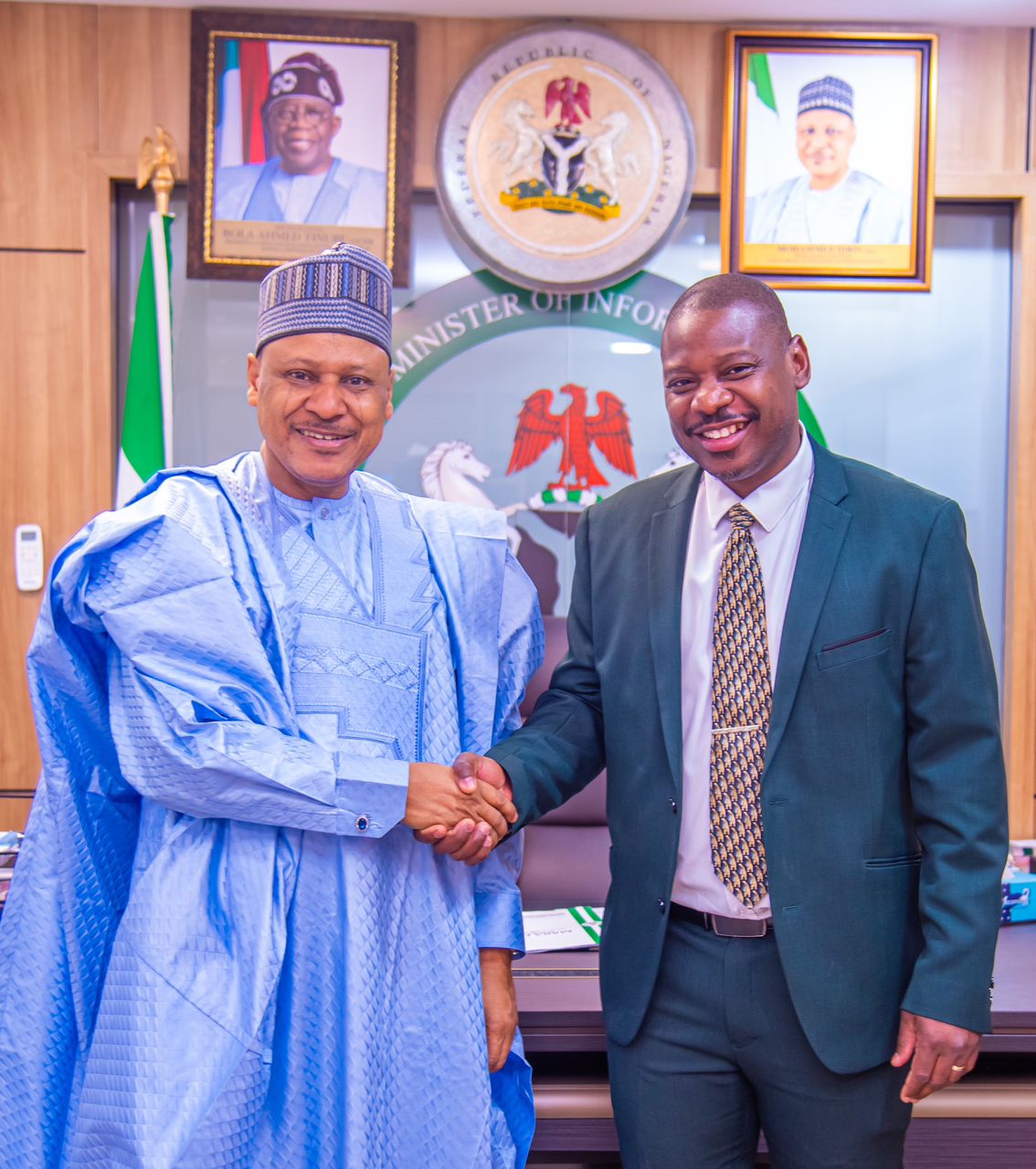
Nigeria will launch the world’s first UNESCO Category 2 Media and Information Literacy (MIL) Centre in February 2026, the Minister of Information and National Orientation, Mohammed Idris, announced during a meeting with the Head of Office and UNESCO representative to Nigeria, Dr. Jean-Paul Ngome Abiaga.
The minister said President Bola Tinubu had directed that the center begin work without delay, adding that the government was prepared to provide full administrative and operational backing.
“Nigeria will not delay this global responsibility. The UNESCO Media and Information Literacy Institute will commence operations in February 2026, with full support from the Federal Government. We are ready, and we will deliver,” he stated.
The minister emphasized that the Centre is a global institution that will serve humanity and strengthen national unity through media literacy.
“This Institute is not just for Nigeria. It is a global centre that will transform how nations handle fake news, misinformation, and digital literacy. We are building a world-class institution that will train people who will go back and train others worldwide,” he said.
The government views the Centre as part of its broader national orientation effort under the Renewed Hope Agenda, intended to strengthen access to factual, responsible, and development-focused information.
UNESCO’s Head of Office and Representative a.i. to Nigeria, Dr. Jean-Paul Ngome Abiaga, said his visit was to congratulate the country for securing the first MIL Associated Centre globally. “It is important for us to come and introduce our team that works on communication and information and to congratulate the Honourable Minister for the big achievement that Nigeria has managed to achieve at the last UNESCO General Conference in Samarkand,” he said.
Abiaga added that UNESCO viewed the institute as a major step for the continent.
“To have the first in the world Media and Information Literacy Institute established here is something we are very proud of. Nigeria is showing the example, not only in Africa, but also across the world,” he said. Dr. Abiaga stressed that Nigeria’s success represents a continental victory “If we succeed in Nigeria, it is the whole of Africa which succeeds.”
According to Idris, several preparatory steps are underway, including the development of legal and operational frameworks and the selection of a pioneer Director-General who will lead the Centre ahead of its launch. He also disclosed that work had begun on creating training programmes for media professionals, policymakers, educators, researchers, youth leaders, and digital communicators from Nigeria and abroad.
The minister said Nigeria would continue to work closely with UNESCO and the Nigerian National Commission for UNESCO to ensure the Centre meets global standards and delivers measurable results. He added that UNESCO’s endorsement carried symbolic weight.
“At a time when some doubt Nigeria’s capacity, UNESCO has reaffirmed our place as a true partner in global development. We will honour that confidence,” he said.
The meeting ended with Idris presenting the UNESCO delegation with the FGN Connect Magazine, which highlights government communication strategies and public-awareness initiatives.