

They say a civilisation that forgets its language is a civilisation leaning dangerously on the balcony rail. Well, in Nigeria today, someone has clearly decided to give that railing a playful shake.
Last week, at the 2025 Language in Education International Conference in Abuja, Minister of Education Dr. Tunji Alausa unveiled his latest masterstroke. The Federal Government has reversed the 2022 National Language Policy. English is once again the sole medium of instruction from pre-primary straight to tertiary. If you were hoping your child might learn in the same language their grandmother prays in, sorry. The queue for “global relevance” starts on the left.
To many Nigerians, this was not just a policy shift. It felt more like a cultural slap delivered with a confident smile.
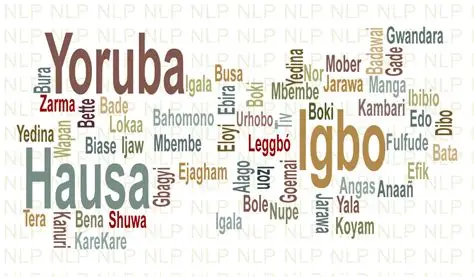
The now-scrapped policy actually tried to make sense. Children in Early Childhood Education through Primary Six were supposed to be taught in their mother tongue or the language of their immediate community. Radical idea, I know. In a country with hundreds of languages, this was an attempt to prevent us from becoming strangers to our own linguistic DNA. Our languages are not mere mouth exercises. They carry philosophies, science, poetry, mathematics, spiritual logic, musical patterns and entire cosmologies. They are not “local content” but inherited textbooks from our ancestors. One scholar even described native languages as an embodiment of indigenous science, art, music, epistemology and philosophy. But why protect all that when English is available?
For his part, Dr. Alausa offered what he called “extensive data analysis.” According to him, regions that implemented mother tongue instruction had lower performance in exam giants like WAEC, NECO and JAMB. Apparently, the evidence says English saves lives, improves scores and washes your educational sins away. But those asking questions wonder whether this is truly about data or just sentiment packaged in the language of efficiency. Because the emotional and cultural cost of erasing indigenous medium education does not quite show up in a spreadsheet.
Parents and educators across social media certainly did not need any spreadsheet to share their feelings. Some parents insisted this is the right move because their children “must face the world in English.” Others pointed out that throwing away the entire mother tongue policy because of certain failures is an astonishingly lazy solution. One commentator noted that shortcomings should be addressed holistically, not swept into the Atlantic Ocean. Some voices from the grassroots are even more blunt. One said, “Mother tongue learning doesn’t have to replace English, just complement it.” Another said, “We are a slave colony. Our owners said no,” which might be hyperbole, but tells you exactly how betrayed people feel.
What makes this reversal especially painful is what Nigeria stands to lose beyond classrooms. When you stop teaching in indigenous languages, you are not just changing the mode of instruction. You are unplugging cultural memory. Myths, proverbs, idioms, spiritual metaphors and cultural wisdom often do not survive translation into English. Try explaining the depth of a Yoruba proverb to someone who thinks “Eku ojo meta” means “hello in three days.” Good luck. A civilisation loses something vital when the language carrying its worldview is sidelined.
There is also the small matter of whether this was truly about education quality. Dr. Alausa claims mother tongue instruction correlated with lower exam performance. Experts counter that the real issue may have been the sloppy implementation. There were not enough trained teachers, not enough textbooks and not enough coordination. In many multilingual urban schools, teachers defaulted to English out of sheer practicality. Research shows this. But instead of fixing the actual gaps, we reached for the nearest sledgehammer and crushed the entire policy.
The impact goes further. Language is about belonging and identity. When you erase local languages from formal education, you signal that they are inferior. This is not just a classroom problem. It risks fracturing communities and weakening national cohesion. And yes, English is a global language, but must global always mean colonial? Many countries balance global languages with indigenous ones. Nigeria should not be forced into the absurd choice between heritage and modernity.
Where do we go from here? First, the Ministry should take a deep breath, drink cold water and consider that this policy should not be treated as gospel truth. A comprehensive review is needed. Linguists, educators, parents, cultural custodians and affected communities must all be part of the conversation. This issue touches the identity of millions.
If the previous policy failed due to poor outcomes, then fix the reasons. Train more teachers. Develop proper indigenous-language learning materials. Equip multilingual classrooms. Evaluate the rollout with clear metrics rather than hurried impressions. Instead of scrapping the system, upgrade it.
A hybrid model remains the most logical approach. Children start learning in their mother tongue, which builds cognitive strength, and then transition to English without losing their identity. This is not theory. It is how many high-performing countries do it. It respects both heritage and the demands of modern life.
Outside classrooms, the government should support cultural centres, digital content creation, literature, media and community-led revival efforts. Schools do not have to be the only custodians of language. But they should certainly not be the graveyard.
Finally, if the government wants Nigerians to buy into its data-driven justification, then engage the public honestly. Launch town halls, radio discussions, open forums, social media Q&A sessions. Listen to those who will live with the consequences of this decision. Rebuild trust by respecting the voices of the people.
In the end, this debate is not really about English. It is about what we value. When we kill mother tongue education, we are not just discarding a syllabus. We are tearing pages from our civilisational diary. Dr. Alausa says this move is “evidence based,” but evidence should include more than exam scores. It should reflect heritage, identity and the intellectual wellbeing of the next generation.
Nigeria is not just a country with many languages. It is a living museum of human memory, philosophy and creativity. English is important, yes, but it should not drown out the heartbeat of our indigenous tongues.
If we let this reversal stand unchallenged, our classrooms may produce children fluent in English but illiterate in their own heritage. Children who can explain photosynthesis but not their own proverbs. Children who grow up as tenants in the house of their ancestors.
Surely, that cannot be the legacy we want.